
Kategória: Research Blog
Forrás: https://digitalistudastar.ajtk.hu/en/research-blog/women-s-political-participation-in-the-western-balkans
Women's political participation in the Western Balkans
Szerző: Dianna Horvát,
Megjelenés: 04/2019
Reading time: 7 minutes
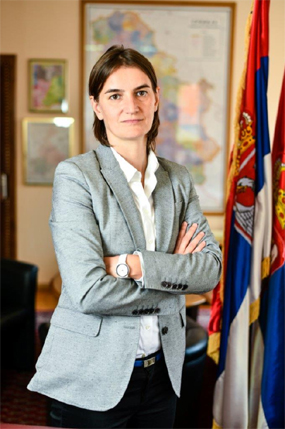
Over the past decade, Western Balkan countries have seen some progress in the more active involvement of women in political processes, but their figures are still lower than the EU average. Currently, Serbia has a first-ever minister, and North Macedonia has a woman presidential candidate. Nevertheless, women lag behind when it comes to active involvement in the political sphere, and they usually run for lower positions on the political ladder.

 |
 |
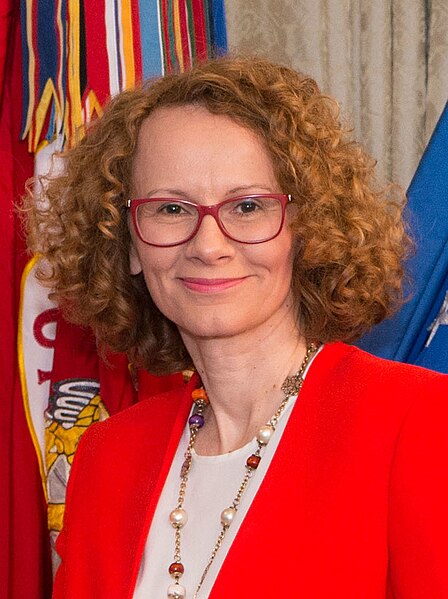 |
Source: Ana Brnabić, Olta Xhaçka, Radmila Šekerinska, authors: Ministry of Public Administration and Local Self-Government, Republic of Serbia, U.S. Army Sgt. Amber I. Smith, Army Sgt. Amber I. Smith - James N. Mattis, licence: CC BY-SA 3.0, CC BY 2.0, CC BY 2.0
Despite the positive achievements in women’s share in parliamentary and ministerial positions, this tendency is less tangible in local governments, where, on average, only 7.5% of women are involved in the decision-making process. There are also noticeable differences between the countries of the region: in Albania, for example, 15% of the mayors are female, while in Kosovo, none of them. There are no gender quotas for political parties, and there are very few parties in the Western Balkan region that have had female leaders (some of the exceptions are the Democratic Party of Serbia and the Social Democratic Union of Macedonia, both of which have already had women in leading positions). In the political party’s structure, women often hold lower ranks and are not actively involved in the decision-making.
To improve the involvement of women in political life, some of the countries established the so-called women parliamentary networks, which organise meetings on the international level as well. Among others, these get-togethers have the exchange of experiences and raising public awareness of different gender-related issues on their agenda and are also attended by the representatives of non-governmental organisations. Thus, the positive results of these meetings are to be looked at and examined in the coming period. However, taking into account the current situation, female participation in political activities, decision-making, and the work of political parties is still low and characterised by male dominance. For women to climb up the political ladder, a cultural change is needed, starting from the family and local communities, where patriarchal mentality often bars them from active political involvement.
Women in the Western Balkan labour market
Across the region, gender inequality can also be found in the education: in fact, more women (62%) graduate from higher education institutions than men (52%). Still, only 37% of women are active in the labour market, and according to a survey, they do three times more housework than men. Not only are women lesser employed than men, but they also earn less. This inequality is even more detectable in the private sector. Discrimination starts at job interviews, when women are unlawfully asked about their marital status and their future family plans. In more traditional environments, gender roles and obligations are still deeply rooted, which is seldom reported or spoken about by women who endure them, while legal measures against these inequalities are sparse. Balancing between work and family life can also be challenging for women, especially in a society where domestic work and child-rearing is frequently perceived as the women’s responsibility. Often, not only the male but also the female family members approve these traditional viewpoints, thus making it even harder for the otherwise-minded women to break with their roles and seek support or legal advice. Furthermore, discriminative behaviour can also occur in workplaces by male colleagues in both formal and informal communication. Non-government organisations from the region play a crucial role in improving gender equality, raising public awareness through different activities, and providing counsel for women on their rights and possibilities. Nevertheless, for real changes to occur, it is of key importance to implement the existing legislation.

Traditional gender roles are still deeply rooted in the region, which can be felt in the labour market as well.
Source: Shutterstock
The European Parliament’s Committee for Women’s Rights and Gender Equality (FEMM) adopted the Resolution on Women’s Rights in the Western Balkans, issued by a Croatian MEP Biljana Borzan in January. The document—which was passed by a slim majority—addresses issues such as violence against women, their inclusion in the labour market and political participation, among others. Over the past five years, this has been the first document of its kind that deals with the Western Balkan region. Gender equality is a fundamental right in the European Union, and a European value that is also part of the EU integration process. It is also included in the Chapters of the acquis, e.g. in Chapter 19 (Social policy and employment), Chapter 23 (Judiciary and fundamental rights), and Chapter 24 (Justice, freedom and security). From the Western Balkan countries, only Serbia and Montenegro has opened some of the EU chapters to date, but none of the above-mentioned three has been closed so far.