Kategória: Research Blog
Forrás: https://digitalistudastar.ajtk.hu/en/research-blog/vision-and-mission-on-the-way-towards-a-more-sustainable-energy-mix

Vision and Mission: On the Way towards a more Sustainable Energy Mix?

Interview with Attila Chikán Jr.


Szerző: Mihály Kálóczy, Cecília Varsányi ,
Megjelenés: 10/2017
 Reading time: 10 minutes

The fossil fuel industry is becoming increasingly aware of the dangers posed to its future nowadays when oil prices are low and renewable projects look like steady long-term investments: many fossil fuel companies are getting on the renewable bandwagon. According to industry insiders, the general transition to clean energy is unavoidable. - In this context, we interviewed Mr Attila Chikán Jr, CEO of ALTEO Plc. about the current energy challenges and global changes in the energy sector. In this blog article, we collected the most exciting excerpts from this interview. 

Concerning power plants, which one is more typical: investment in weather dependent, so-called intermittent, or weather independent, controllable renewables?

All of them are controllable in their own way, as each one can be turned off and, technically, “turned down.” Only the KÁT system (obligatory feed-in-tariff for certain energy types – ed.) is an exception, but even here we are not talking about the fact that the relevant power plant technology wouldn’t allow regulation, but that this is a subsidy system for certain power plants, which allows and encourages its members to always produce into the network.

All renewables are special in their own way. Sun, wind, and hydro turbines have their own controllability. I would also like to add that the latter actually helps the first two. So does biomass and biogas. On the whole, a well-managed portfolio is more adaptable than using only one technology. But certain technologies are evolving at an unbelievable pace, not just in that they are getting cheaper and more efficiently, but regarding the regulations as well. The ALTEO Group follows precisely this principle: We don’t choose only one technology but diversify our portfolio. […]

Attila Chikán Jr., CEO of ALTEO Plc.
Forrás: ProfitLine.hu

Is it a part of this transformations process that big companies involved in fossil energy, such as Shell, are investing more and more into renewable energy sources?

The first and more direct reason is that these companies have huge capital and want to invest it into projects that promise good return—perhaps into something that will be worth it on the long run as well. With these companies, the reason for these particular investments is the same as for all others: Renewable energy has come so far that it counts as good business. Sustainability doesn’t only mean that something is very clean and very green, but that it also works economically. That’s why it is sustainable, that’s why they invest in it.

The other reason is the consumer, the voter—namely: us. Companies that neglect and ignore climate protection and the spread of renewables are growing less presentable, however professional their marketing or CSR operations are. We will eventually reach a point where the consumer will not choose a company which cannot show substantive accomplishments concerning these questions. They will not buy their cars, fill up at their gas stations, use their washing powder etc. On the other hand, those who show leadership in this regard will have a significant advantage. Again, it is good business because it is driven by consumer demand.

Let’s take the biggest German energetic companies E.ON and RWE as example. Where renewable energy usage didn’t exist in the past, it has by now grown into an independent business branch and thus the biggest corporations have branched out. These companies are consciously preparing for renewables and innovative methods continuing to bring about breakthroughs in the future. E.ON is expecting that, by 2020, the sales returns from the ‘smart energy’ sector in Germany will be bigger than from traditional natural gas and electricity trade. The energetics revolution does not have to be about old large companies going bankrupt. This is a realignment, an emphasis shift, which could proceed smoothly if corporations figure out these changes in time. Let’s take MVM as a Hungarian example, which has also started dealing with renewable energy. In short, as the old saying goes: “If you can’t beat them, join them.”

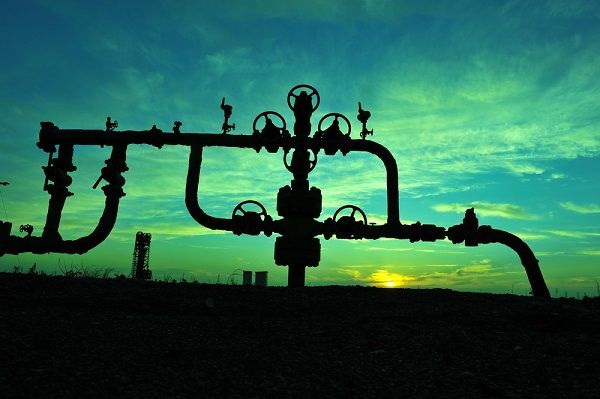
Investing into fossil or renewable energy sources?
Forrás: Shutterstock

You are leading the charge in a new development—more specifically, you have set out to develop the model for integrating renewables into the electricity system.

This development is about creating a control centre which is capable of integrating energy storage solutions and weather-dependent renewables, among others, well and in a cost-effective way into the electricity system. This control centre is called VPP: virtual power plant. This is useful because we want to use renewables even when the “sun is not shining,” and VPP offers a means of reasonable optimisation. With the help of VPP, it does not fall on the entire Hungarian electricity system to manage the power plants in it, but on us, because, when integrated in the control centre, the issue does not even appear from the perspective of the Hungarian electricity system. If for example, if we optimise 10 wind turbines indoor and have them work as timetable conservator while integrated into a control centre, these produce renewable energy with no or little extra optimisation demand.

Which international trends cannot be left out of consideration for your portfolio and when creating your investments?

There are two trends in the world that must definitely be considered.

The first one is that it is possible to develop a more efficient energy strategy even on a smaller scale—even for households—and companies should definitely take advantage of this. The expression PROsumer (producer-consumer) came into being for a reason, as it is not only about the fact that energy production occurs in smaller batches, but that in certain cases it cannot be decided if we are talking about a producer or a consumer. Today, even on the scale of a household, a heat-pump, a solar panel, or a solar collector with the pertaining smart grid or microgrid ensure great flexibility.

This represents a transformation, but what is its true essence? When Henry Ford started machine-production, he was thinking in terms of one model only. They manufactured one type of car and flooded the world market: “You can have your car in any colour you want, as long as it's black.” This is exactly what the energy market looked like 20 years ago. If we look at the car industry today, we see that two identical cars are not being produced: I can basically plan my own car. And this is what is currently happening in the energy market. But for this, we need to transform even our thinking in a very radical way. “In this system, there are no more taboos; the word “impossible” – within the context of the laws of physics, of course – has to be forgotten.”


Opening pic: AJKC