Kategória: Research Blog
Forrás: https://digitalistudastar.ajtk.hu/en/research-blog/variations-on-geopolitics-classical-geopolitics-and-its-challengers

Variations on geopolitics

Classical Geopolitics and Its Challengers


Szerző: Wilhelm Benedek Tibor,
Megjelenés: 08/2017
 Reading time: 12 minutes

Critical geopolitics was established in the 1980s and 1990s by French and Anglo-Saxon scholars. Critical geopolitics can be rated as a paradigm shift in this field. The word ‘critical’ derives from the fact that critical geopoliticians first and foremost analyze or criticize existing geopolitical schools. In reference to the afore-mentioned paradigm shift, critical geopolitics introduced social theories, in particular constructivism, into geopolitics. Today, this new perspective allows critical geopoliticians to expand the scope of interpretation and apply new methods like discourse analysis. 

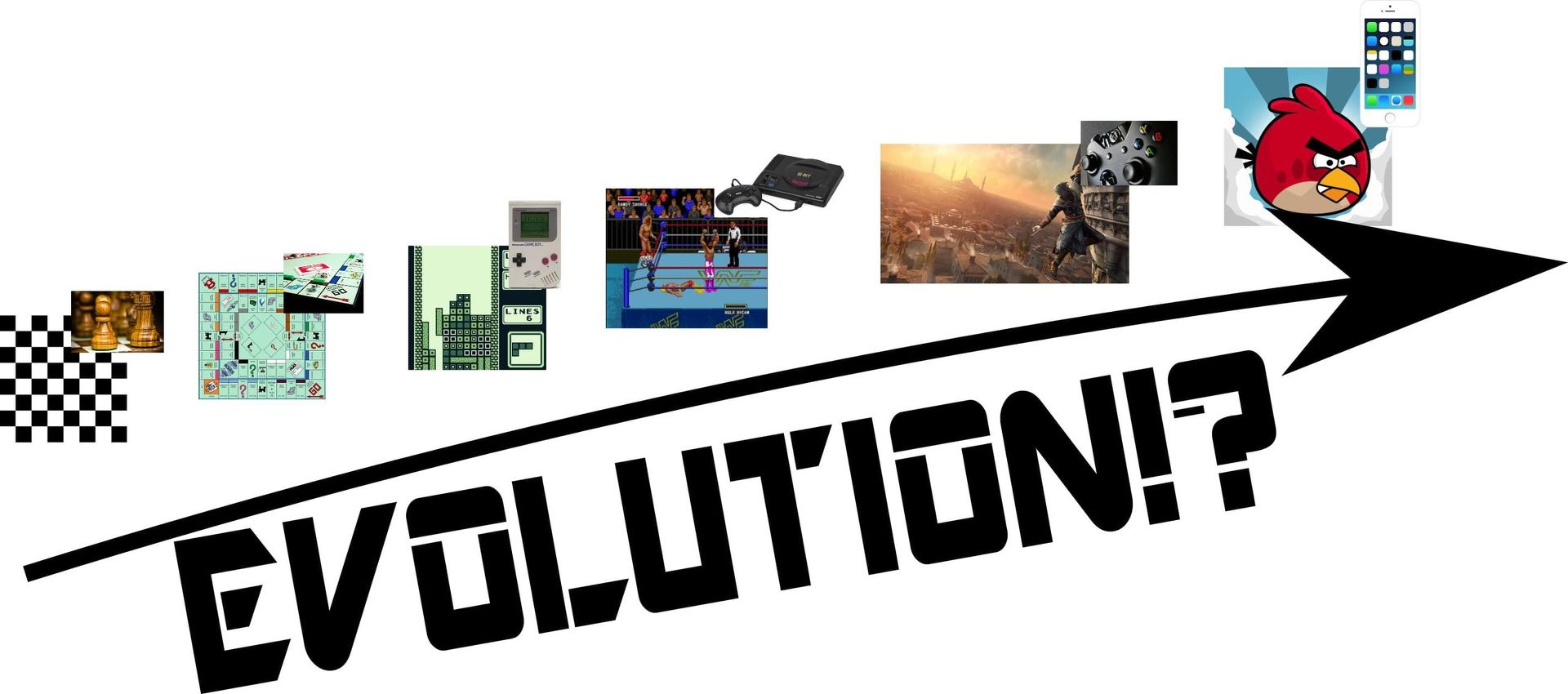
Different generations share different needs. This self-evident statement shows its significance in, among others, the gaming habits of children. 100 years ago children met to play board games together. Today board games are still played, but computer and mobile games have taken over and allow for collective play via the internet. Many video games share common characteristics with board games. However, collective play from different homes, as well as many other digital innovations, have drastically changed gamers’ perspectives. The emergence of critical geopolitics in the late 20th century represents a similar paradigm shift in comparison to classical geopolitics from the late 19th and early 20th century. Critical geopolitics opens a new access point to geopolitics, treating the topic from a constructivist instead of a positivist perspective. 

Evolution?
Design by AJKC Research using the following elements: Chess (design by Gellinger), Chess Pieces (design by Garry Knight), monopoly (design by paulbr75), Monopoly (design by William Warby), Tetris on Gameboy (design by William Warby), Tetris (design by Conor Lawless), The original Japanese Mega Drive (design by Evan-Amos), WWF Wrestling Sega Megadrive (design by Peter-Ashley Jackson), Hookblade Hanging (design by SobControllersXbox (design by InspiredImages), Angry Birds (design by thethreesisters), IPhone with icons (design by Blurred203).
Licencing: CC BY-SA 3.0.

One of the first voices of critical geopolitics was Yves Lacoste (1929–), who in 1976 wrote  the essay “La géographie ça sert d'abord à faire la guerre” (geography is primarily for waging war). In his essay, Lacoste criticized the way the educational system, the mass media, and political actors promote geopolitics as a discipline. Furthermore, he uncovered the strategic thinking of politics during the oil crisis and the Cold War, and highlighted the strategic advantage of geopolitical knowledge. Hence, Yves Lacoste’s key message is that geography is politicized, or, in other words, that geography serves politics as an instrument of domination. This interpretation of geography differs from the determinist German and British voices in geopolitics, as well as from the cautious social contributions in French geopolitics. Yves Lacoste’s approach is therefore the Tetris of critical geopolitics. 

Another pioneer of critical geopolitics, John Agnew (1949–) discussed in his 1987 book “Place and Politics” the meaning of space. According to Agnew, space consists of three dimensions. First the specific location, which stands in relation to other locations, second, the locale, where social interaction takes place, and third, the sense of place, meaning the personal and emotional attachment to the place. According to Agnew, this differentiation liberates geopolitics from its state-centrism and allows inferences on global conditions. On the one hand, he uses the aforementioned categories to conceptualize places as geographical settings for political action, and on the other hand, he relates the changing character of places to politics and their further changes to the wider environment. In other words, we could say that Agnew analyzes the impact of board games on video games, as he uses geography like the geopoliticians of the past as a basis for his paradigm. Nevertheless, he develops a videogame-like concept from this perspective, considering society and people’s psychology.

John Agnew’s student Gerard Toal (1962–) supported Agnew in his research on geopolitical reasoning by discourse analysis. In his most famous book, “Critical Geopolitics” from 1996, Toal discusses how the classics of geopolitics from Rudolf KjellénFriedrich RatzelKarl Haushofer, and Halford Mackinder relate to political power and how they construct space, race, and gender. The multitude of perspectives and the wealth of examples in his book enrich the geopolitical discourse and open up geopolitics for interdisciplinary debate. In reference to video games, Gerard Toal does not play Tetris anymore, but has adapted to more complex video games. 
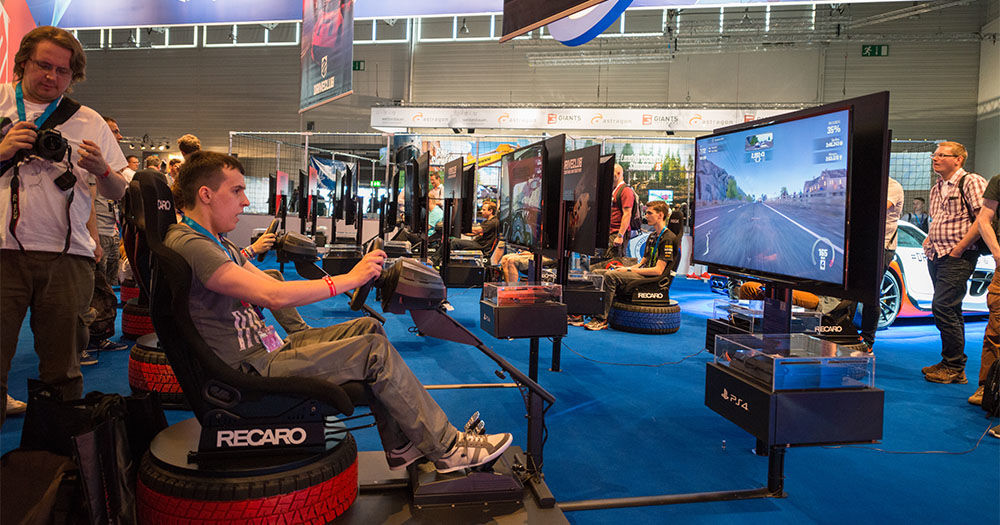
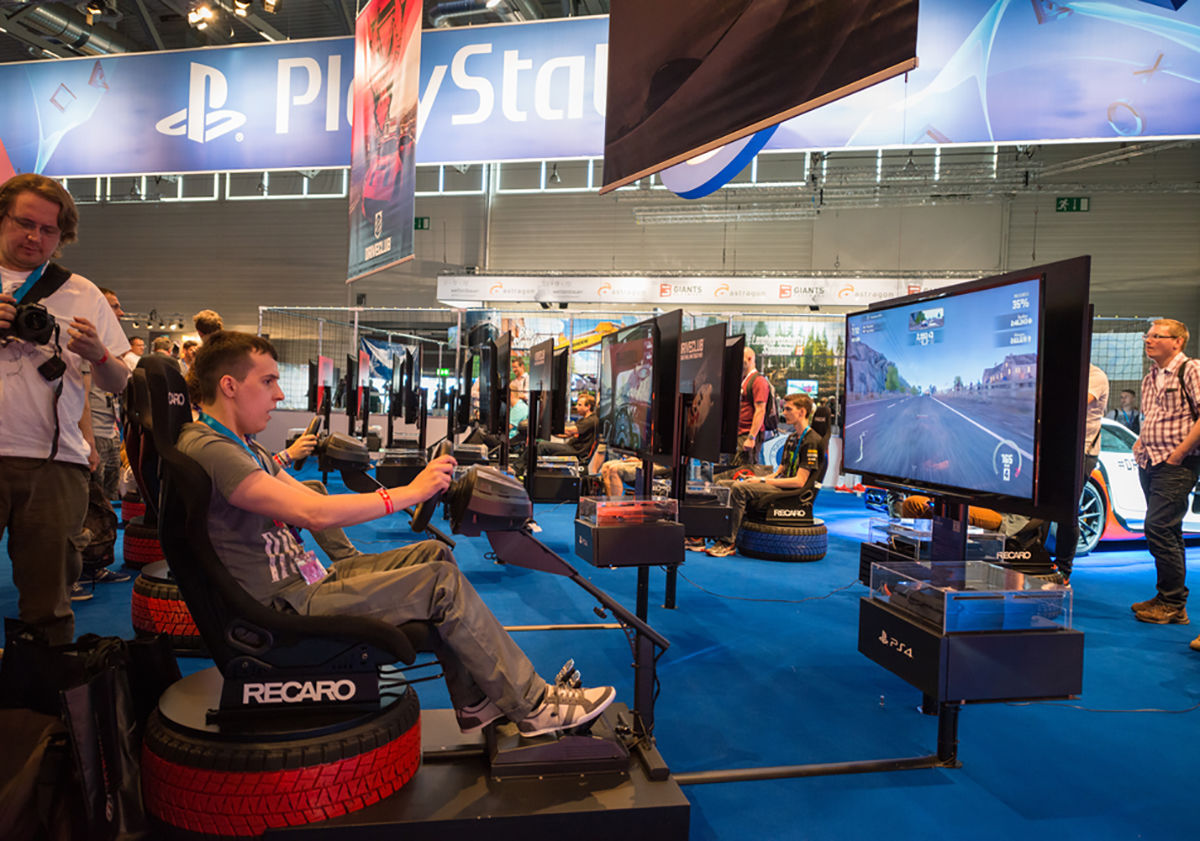
Driveclub presentation on 'gamescom' trade fair, Cologne.
Source: Shutterstock

Similarly to Toal, the Irish born Simon Dalby (1958–) broadened the scope of critical geopolitics with new analytical areas like security and climate change. In “Creating the Second Cold War” from 1990, Dalby introduced fear as a driving force in geopolitics and added interconnections between ecology and security. Provided that Gerard Toal adapted to complex video games, Simon Dalby’s approach could represent game extensions or updates. British professor Klaus Dodds (1969–) contributed, in addition to extensive regional studies, especially to the representation of space in visual media. In this spirit he analyzed the role of popular culture in connection with geopolitics and studied, among others, geopolitical anxieties in James Bond movies. Klaus Dodds’s game extension can be rated as another evolutionary step in critical geopolitics, because the interpretation of visual media is an alternative to the common discourse analysis in this field.  

To sum up this article, critical geopolitics offer a new point of access to geopolitics. In this regard, critical geopolitics promotes new and interdisciplinary methods, which significantly extend the geopolitical interpretation area. As with video and board games, critical and classical geopolitics share similar principles. However, video games are not the same as board games. The same conclusion applies to critical and classical geopolitics. At first, critical geopolitics were concerned with analyzing given geopolitical thinking and social constructions in the geopolitical discourse. Classical geopolitics invented, changed, and—especially in the late 19th and early 20th centuries—shaped existing paradigms and influenced the geostrategic positioning of countries. The future will tell if critical politics will have a similar impact on politics as its forebears. Notwithstanding, board games and video games coexist until today and both influence in their own ways the playing rooms of millions of children world-wide. The very same scenario could be the future of critical and classical geopolitics.


Get inspired:
Lacoste, Yves (1976) La géographie, ça sert, d'abord, à faire la guerre. Paris: Edition Maspero.
Agnew, John (1987) Place and Politics: The Geographical Mediation of State and Society. Winchester: Allen & Unwin.
Toal, Gerard (1996) Critical Geopolitics. Minneapolis: University of Minnesota Press.
Dalby, Simon (1990) Creating the Second Cold War: The Discourse of Politics. London: Pinter Publishers Limited.
Dodds, Klaus (2005) Screening Geopolitics: James Bond and the Early Cold War films. Geopolitics, Vol. 10, No. 2: 266-289. 


Opening pic by Shutterstock