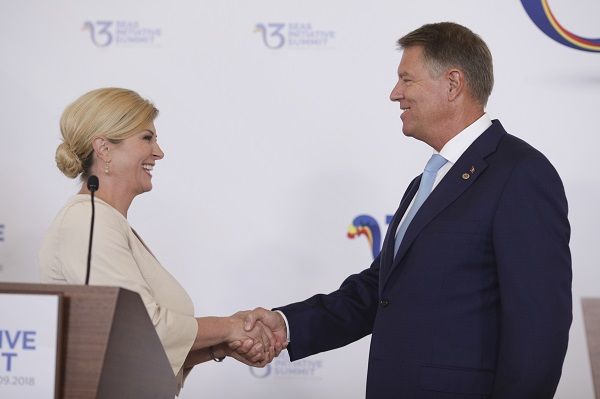
From September 17 to 18, Bucharest hosted a summit meeting among the 12 nations forming the Three Seas Initiative (TSI), a summit that brought about serious progress compared to the meetings of the previous two years. The initiative raises many questions as well: among other things, the fact that TSI countries are all members of the European Union (EU), through which their economic cooperation is more closely connected. TSI, however, focuses on somewhat different fields, and encourages different undertakings.
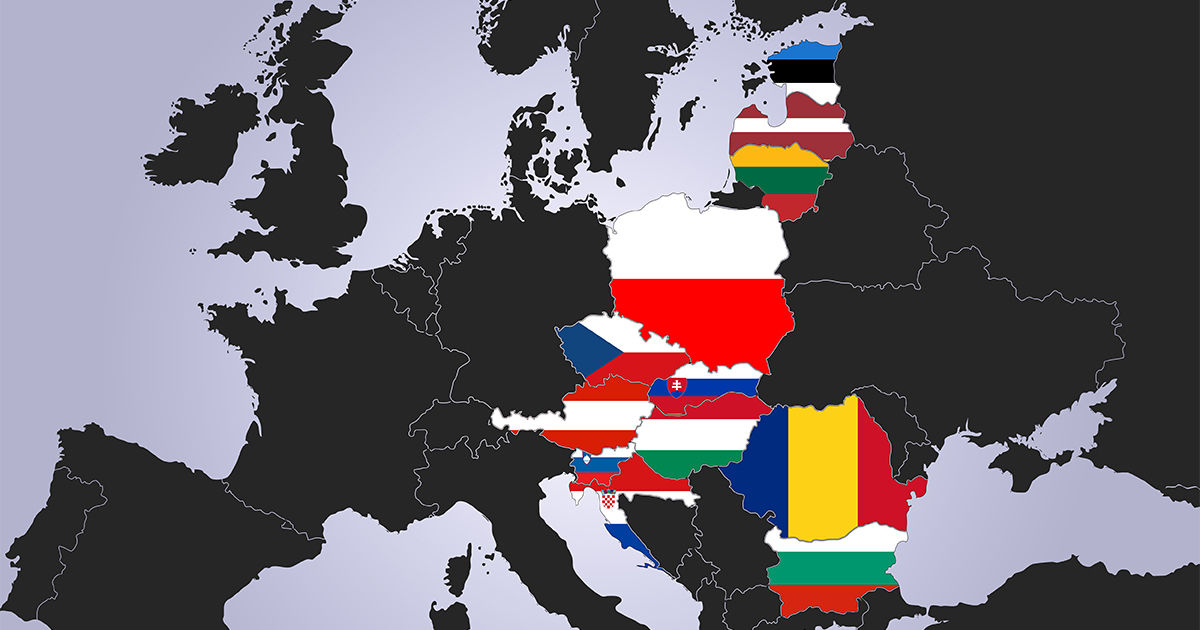
The TSI countries lay in the buffer region between Western Europe and Russia, which gives the cooperation geopolitical meaning in itself. There are a great many people enthusiastic about the initiative, which, according to the Croatian President, is “a vital force of Europe.” Taking a glance at the figures, the countries of the TSI cover one third of the territory of the EU, one fifth of its population, but only one tenth of its economy. The twelve countries—Poland, Estonia, Latvia, Lithuania, Czech Republic, Slovakia, Hungary, Austria, Romania, Slovenia, Croatia, and Bulgaria—are aiming primarily at the conclusion of infrastructural and energy industry investments. Polish President Andrzej Duda is on the opinion that an “energy corridor,” stretching from the Baltics to Croatia, must be established, by which Europe may become allowed to soften up its dependence on the gas coming from Russia through Ukraine. Consequently, the primary aim of the initiative is to enhance regional cooperation in terms of infrastructure, and thus alleviate some of the dependence on Russia. In turn, those objectives may well serve to boost faltering economies, would fasten the flow of cash, and all this would bring about an infrastructural boom and a more vivid economic and investment environment.
The first summit of TSI was held in August 2016 to be followed by a more emphatic one held in Warsaw. The Warsaw Summit welcomed, among others, US President Donald Trump—a clear signal of the importance of the initiative. The third meeting, held this September in Bucharest, was marked by important steps on the way to reach the ambitious goals set earlier.
Jean-Claude Juncker, present at the discussions during the Bucharest Summit, highlighted the fact that an East–West divide is still present in Europe, and more emphasis should be given to its alleviation. This time Trump was not there, nevertheless, he paid his tributes in a mail sent to the summit, and was represented by his Secretary of Energy Rick Perry. The representative of the overseas great power acknowledged that the US was firmly behind the TSI.
Another important guest of the summit was German Foreign Minister Heiko Maas, and his participation reflected the fact that Germany may now be added to the list of countries interested in the TSI. Klaus Iohannis believed that Berlin’s support may add value to the initiative, particularly in regional development. It’s important to note some of the TSI members, including Hungary, Czechia, Slovakia, Hungary and Austria, are closely connected to Germany in the economic domain, and thus none of them would be interested in giving the TSI an “anti-German tone.” Germany may also join the TSI categorically, which would bring resources as well as conflicts to the cooperation: Berlin would be a net contributor, but due to the North Stream and other projects, the German connection would perhaps bring in those Russian interests the Americans and many TSI countries wished to avoid.
The twelve Central European, Baltic, and Western Balkans countries have agreed on close to 70 projects to be launched in the framework of the TSI. Among those projects, cybersecurity, digitalization, and gas supply security projects are paramount. “The Three Seas Initiative has come of age,” commented Romanian President Klaus Iohannis. He also added that TSI does not wish to become an alternative, only a supplement to existing regional and European frameworks. He also added on the objectives of the TSI: “The initiative is aiming at primarily the economic development of the region through linking together the infrastructure along a North–South axis, and on three major fields: transportation, energetics, and digital infrastructure. Thus, it attempts at the modernization and stabilization of the competitiveness of our countries, harnessing all the possibilities lying in regional interconnectivity.” It is important to add that the North–South axis is becoming more and more interesting to many inside and outside the geographical confines of the EU: China wishes to partner in building a railway between Budapest and Belgrade, which prompted the EU itself to create a fund dedicated to North–South infrastructural projects, a cause that had largely been ignored before. Keeping those in mind, it is difficult to escape the conclusion that TSI is, in one sense, a defence mechanism to be used against Chinese economic and investment interests.
During the meeting, the list of the future North–South projects was finalized. Also, the catching up of the twelve TSI countries to Western European levels, i.e. “real convergence,” has been encouraged in a TSI framework, but transatlantic ties have, nevertheless, been emphatically restated. A declaration of intent to the effect of making a common investment fund and the cooperation of regional chambers of commerce was also signed during the Bucharest Summit. The business communities of Western Balkans and Eastern Partnership countries were also present at the meeting, and the organizers wish this instance to become tradition within a couple of years. TSI also promotes a trans-European transportation network stretching between the Adriatic and the Black Sea regions, from the Baltics to the Aegean, under the name Via Carpathia.