The UK’s main priorities for the Brexit negotiations could be summarised as below:
- Maintaining the Common Travel Area with Ireland
- New trade agreements with countries outside of the EU
- Pursuing a free trade agreement with the EU
- Continued cooperation with Europe in matters of security and intelligence
- Control of immigrations and laws
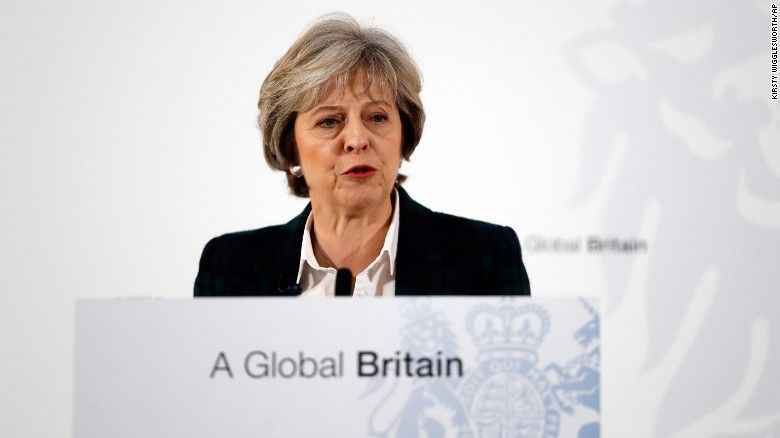
The PM highlighted that her aim was regaining full control of immigration and law-making and as a result leaving the single market is inevitable. She also revealed that she hopes to pursue a tax-free trade agreement with the EU and would seek an arrangement to replace the provisions regarding the customs union of the EU law. While she stressed that the UK would be free to make its own trade and customs agreements with third countries, she is open to an arrangement which could amount to a partial membership of the EU customs union.
May stressed that she wishes a continued cooperation with Europe in several fields. She expressed her desire for alliance with Europe in intelligence sharing, fight against crime and security policy. She also emphasised the importance of collaboration in science and technology, recognizing that the academic and scientific community is one of the greatest strengths of Britain.
In her vision about Britain’s future she wishes to focus on strengthening the cooperation between the four nations of the United Kingdom. In order to do that she said she will welcome the propositions of Scotland, Wales and Norther Ireland regarding the negotiations.
May said she would seek a “phased process of implementation” in order to provide time for preparations and calm fears of sudden jolts to the economy. The British currency has endured a rocky ride since the vote last summer to leave the union, but the sterling responded strongly to Ms May’s speech, wiping out losses earlier in the week. She aims to finish the negotiation in two years and promised that the both Houses of the Parliament will vote on the deal at the end.
The PM said that she wishes for an equal partnership between a strong Britain and a strong EU, expressing her support for the European Union and its remaining members.
The EU’s chief Brexit negotiator, Michel Barnier responded to PM May’s speech on Twitter: