Kategória: Research Blog
Forrás: https://digitalistudastar.ajtk.hu/en/research-blog/the-first-balkan-eu-presidency
The First Balkan EU Presidency
An European Perspective and Connectivity for the Western Balkans via the Bulgarian Presidency
Szerző: András Braun,
Megjelenés: 02/2018
Reading time: 12 minutes
Enlargement is among the key priorities of the Bulgarian EU Presidency, and as they say in Sofia, the Bulgarian ambition is to be a “Balkan Presidency,” which emphasizes the country’s commitment towards the European future of its neighbourhood. In addition, it seems that not only the new Presidency but also the EU institutions are finally planning to boost the accession process of the six Western Balkan (WB6) countries. But what can Sofia “do for the Balkans,” and what can we expect from the presidency in that respect?
The State of Play: EU Enlargement in Southeast Europe
EU enlargement efforts in Southeast Europe stretch back to the 1980s, when Greece was the first country from the region to initiate European integration (within the framework of the EEC at the time). Later Slovenia (in 2004), Bulgaria, Romania (both in 2007), and Croatia (in 2013) also became member states of the EU. The accession of the “rest,” the so-called Western Balkans (Bosnia & Herzegovina, Macedonia, Montenegro, Serbia, Kosovo, and Albania), has been on the table since 2003, when the Council adopted the Thessaloniki Agenda, which gave them a perspective for membership. Despite becoming “potential candidates,” the EU integration process of the Western Balkans is much slower than expected. Because the countries are having problems fulfilling the accession criteria, the EU had to realise that more serious engagement is needed. In the meantime, there is also an external burden on Brussels, as Chinese, Russian, Turkish, and other interests are increasing their presence in the region.
After a long period of quasi-hibernation, recent geopolitical events seemed to cause a stir in EU circles. Even Commission President Jean-Claude Juncker (who had doubts as to whether there should be enlargement in the next years) announced that the European Commission has to publish a credible enlargement strategy for “Serbia and Montenegro as frontrunner candidates in the Western Balkans.” The President of the Commission highlighted that “If we [the EU] want more stability in our neighbourhood, then we must also maintain a credible enlargement perspective for the Western Balkans.” Besides that, the Leader’s Agenda, adopted by the European Council, envisions an EU–Western Balkans Summit in Sofia. The Sofia Summit might be the roadmap for the Western Balkans (a possible second Thessaloniki Summit), and many European and Balkan politicians attach great importance to this event. However, the new paper presented in Strasbourg is not as concrete as some would have expected. Fortunately, it has a very positive tone, and this may signal to the WB6 countries that the EU’s door is wide open for the region—if they are able to fulfil the accession conditions and if the EU is able to absorb new members.
The First Balkan Presidency of the EU
Due to their cultural and historical roots, Bulgaria and the rest of the region are strongly interconnected. Sofia laid out a set of ambitious plans to be achieved in the forthcoming years, and the current government especially supports the idea of deeper integration. The reason behind this is not only emotional—It is also strategic. Bulgaria recognised that rapidly-emerging challenges (migration, organised crime, drug trafficking, and other external security issues) might easily challenge the country’s position, and in order to avoid this, it is crucial to maintain stability not only within the European Union but also in its neighbourhood. The primary ambition of Bulgaria is therefore to join the Schengen Area and the Euro Zone. At the same time, the country also supports the “EU prospects and connectivity” of the Western Balkans.
Greater connectivity between the EU and the Balkans would enhance regional cooperation and good neighbourly relations. Areas like transportation, communication, infrastructure, energy, mobility, and education call for real and immediate actions in the Balkans. That is the reason why Sofia can offer its assistance in the field of connectivity. In view of the fact that Bulgaria has limited resources and capacities to accelerate the integration process, digital connectivity seems to be an excellent and practical instrument. Moreover, the Commission highly supports this idea and will soon launch the “Digital Agenda for the Western Balkans.” This flagship initiative will be a roadmap for the region that includes not only the reduction of roaming costs but also the promotion of a digital society. Since the Bulgarian Presidency is a Balkan presidency, the Borisov government might become a relevant Pan-Balkan lobbying force. It is also important to mention that Bulgaria has no open issues with its neighbours, and by virtue of the presidency, Sofia is currently the informal leader of the Balkans (a notion that is certainly rejected in other countries of the region).
Optimism Before Everything
What can we expect form the Bulgarian Presidency? Some see Bulgarian priorities as too ambitious, while others doubt whether this presidency will be able to achieve significant results. It is clear that, because of the opposition of certain member states, the inclusion of Bulgaria into the Schengen Area is uncertain, to say the least (most of the concerns are understandable, but Bulgaria did recently play an important role in European border protection). Regarding the Western Balkans, reconciliation, good neighbourly relations, and regional cooperation are prerequisites of EU membership.
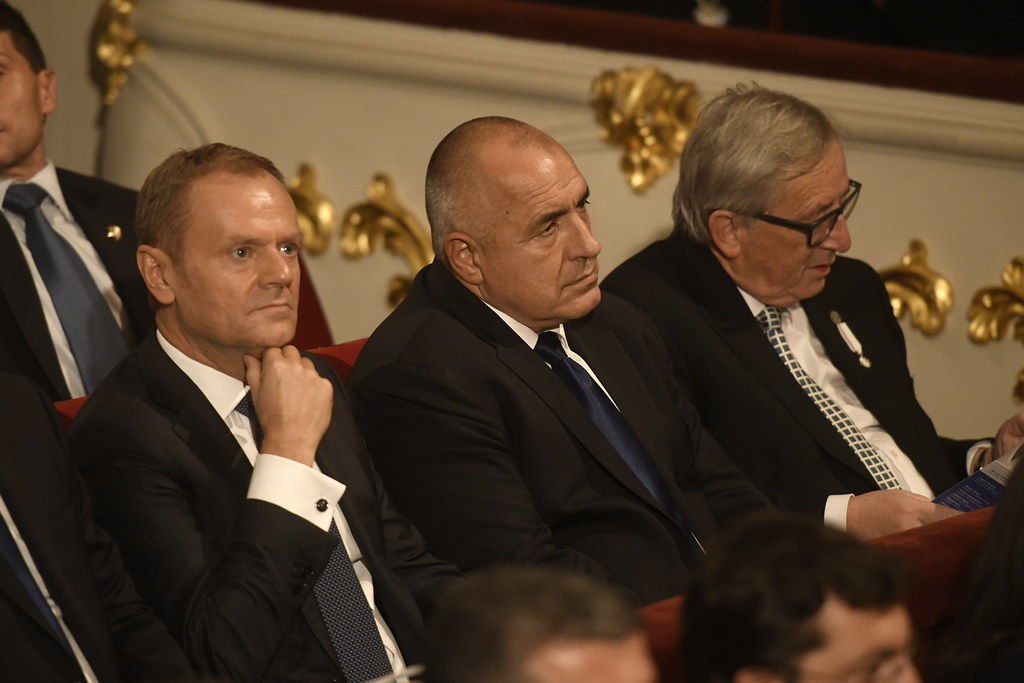
Bulgaria, with its regional experience, might help to achieve further progress in these fields. As it has already been stressed many times, the lack of real political commitment is a serious obstacle for the Western Balkans on their path to the EU. On the other hand, we cannot forget that today even the EU itself is not ready for any further enlargement. For this reason, the Commission will launch several new initiatives based on the current Treaties to improve the democratic, institutional, and policy framework of the EU. Meanwhile, Montenegro and Serbia (and the other four countries) have to be ready to join by 2025. Of course, we cannot exclude the objective factors, but it is important to note that the priorities and goals set by Boyko Borisov and his government are well-defined and realistic. If Bulgaria uses its resources and regional experiences smartly, irreversible progress can be achieved in the Western Balkans.
Donald Tusk said that the history of the Western Balkans is more exciting than the TV show Game of Thrones. It is true that after the perturbing 1990s many unresolved issues still divide the states in the Balkans, and that the European Union also had a significant role in the continuing presence of regional division. For many years, the EU (and some member states who were not in favour of the enlargement) decided not to get deeply (let alone fully) involved in different types of regional and more specific domestic conflicts. All of this contributed to the slow-motion integration process, and this delay also prevented the reconciliation of ongoing disputes. The Bulgarian Presidency and the effect of the new enlargement strategy published by the European Commission can finally strengthen the EU’s commitment towards the region.
The priorities of the Bulgarian Presidency might also strengthen this new and optimistic momentum. Some might look at Bulgaria with suspicion, but we have to bear in mind at least two aspects: First, Bulgaria has considerable regional expertise and also a fresh memory of the transition. And second, we shall not have any false expectations. Bulgaria’s aim is to contribute to the support of EU-related reforms, and this supports the integration process of the WB6 countries indirectly, rather than directly.
Opening pic source: eu2018bg.bg