Kategória: Research Blog
Forrás: https://digitalistudastar.ajtk.hu/en/research-blog/sport-and-politics-hand-in-hand-the-commonwealth-games
Sport and politics hand in hand?
The Commonwealth Games
Szerző: Bocskor Kitti,
Megjelenés: 05/2018
Reading time: 6 minutes
The origin of the Commonwealth Games
The idea of an imperial sporting event dates back to 1891 when the clergyman John Astley Cooper suggested a Pan-Britannic-Pan-Anglican Contest and Festival every four years as a means of increasing goodwill and a good understanding of the British Empire. Although the first such Contest was organized in 1911 at the Crystal Palace in London to celebrate the coronation of George V, the official forerunner of the Commonwealth Games was the first British Empire Games in 1930 in Ontario, Canada, with 11 nations participating.
At first, the Games were full of imperial rhetoric. The Canadian Hamilton Spectator set out with much pride an editorial note stating that “from the outposts of the Empire on which the sun never sets have come the flower of the nation’s young manhood and womanhood, the fleetest and sturdiest of her sons and daughters.” The Empire Games created an opportunity to experience the imperial citizenship as a positive thing through a ritual.
The rhetoric was the perfect example of the unique style of the British imperial control, that allowed some measure of self-control for the colonies. Rather than having a military control, they created a “cultural power.” Beliefs, rules, conventions and a set of ideas were carried through the administration of the Empire. “In the case of Britain and its Empire in the last hundred years or so, sport played a part in holding the Empire together,” argued historian Harold Perkin. He also added, “few would deny that most of the sports and games the world now plays were first organised in the present forms by the British in the nineteenth century: association football, rugby, cricket, tennis, golf, rowing, track and field athletics and skiing.”
The number of participants steadily grew after the first games, and the British Empire Games turned into the British Empire and Commonwealth Games in 1954 and British Commonwealth Games in 1970. Since 1978 the term Commonwealth Games has been used.
After the independence of several colonies, Britain wanted to maintain cordial relations with their former subjects. Sports allowed Britain to decolonise on a friendlier note and also helped transform the Empire into a commonwealth of nations who agree on the British Crown as their Head of State. At present, the 53 member states of the Commonwealth of nations maintain links with each other through education, sports, culture, and literature.
Politics of the Commonwealth Games
Although the 2014 Commonwealth Games in Glasgow was a sell-out—riding the wave of interest after the 2012 London Olympic Games—the previous Commonwealth Games have not fared so good. Since the process of decolonization, politicians, protesters, and competitors have utilised the competition to contest the dominance of Britain, to campaign against the UK government’s policies towards apartheid South Africa and to assert their own independence. Named as the “Unfriendly Games,” the 1986 Games (Edinburgh) were boycotted by 32 Commonwealth countries, mainly from Africa, Asia, and the Caribbean, as a result of the British Government’s unyielding attitude towards imposing economic sanctions on South Africa. The 1974 Games in Christchurch, New Zealand, came close to being boycotted by African nations because of the Rhodesia issue. It is also notable that Britain tops the hosting list with six games, followed by Australia, Canada, and New Zealand. The overwhelming dominance of former white dominions and Great Britain itself is obvious. Despite 18 African countries being part of the Commonwealth, the games have never entered the continent. There were only three occasions when the Games were held outside the UK, Australia, Canada. or New Zealand: in Jamaica in 1966, in Malaysia in 1998, and Delhi in 2010.
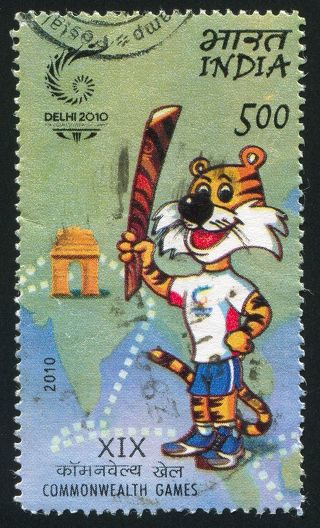
New stamps were released fort the 2010 Delhi Games
Source: Shutterstock
Most of these examples are from the last century, and although the politicization of the Games did not reduce, it did transform a bit. In 2014, the Games were held in Glasgow, before the Scottish independence referendum. When asked about the connection between the Games and the referendum, Nicola Sturgeon argued that the Games “will inevitably leave a feelgood factor. I think there is a very significant momentum behind the ‘yes’ campaign and I feel it everywhere I go in the country. The momentum is with us and as we come out of the Commonwealth Games at the weekend that is us into the final strait of the campaign and that momentum will be visible.” The success of the Games was used to propel the country towards backing independence.
Sports and politics can mix?
Is it necessarily a bad thing that sports are used for politics? In many cases, yes. However, sports can provide an impartial venue for meetings between otherwise opposing partners and create an atmosphere of fair play. The Olympic Truce is the perfect example. A whole specialized branch of diplomacy, called sports diplomacy, is built on this, with many positive and significant results. Think of the two Koreas having a common hockey team at the PyeongChang Olympics in 2018.
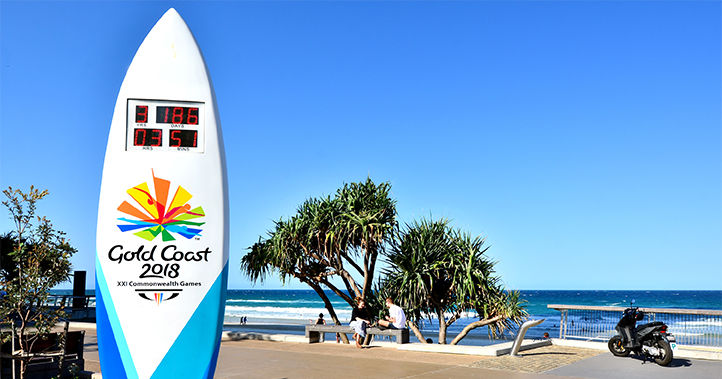
The 2018 Commonwealth Games (Gold Coast, Australia) seems to be a turning point from the past. Until now, we liked to pretend that sports and politics do not mix. However, for the first time the organizers, rather than shying away from the political issues, have embraced them. Commonwealth Games Federation chief David Grevemberg hoped that the event would provide a “fantastic opportunity to magnify awareness of a host of issues, to take advocacy positions, and connect athletes and sports with the social change agenda; from human rights, LGBT rights, and climate change, to female empowerment and indigenous reconciliation.” As prominent Australian journalist Tracey Holmes noted, the Games has represented “a determined effort to take sport out of its self-imposed quarantine.”
The dispute around whether the Commonwealth Games are really worth what they cost is set to continue, but at least Gold Coast 2018 has shown in a way rarely seen before, that sport need not be so afraid of the outside world. And, at the current time when sports organisations and bodies are having to repair their reputations after scandals and controversies, that could be just as important a legacy as the medals that have been won.
Opening pirc source: Shutterstock