Through history, traditions and rituals primarily served as a way of strengthening the community and preserving its values. In every society we can find traditions that – in some form – survived the challenges of the modern world. In Serbian society, family patron saints are celebrated, whereby every Serbian family has a patron whom they celebrate on the saint's feast day. Slava may be the celebration of a patron saint of a family, a guild, a community – for example, a village or town – or a specific guardian of a church.
In Serbian language, the word slava [ˈslâʋa] has contextual and traditional interpretations. First of all, it means glory and fame. The expression večna mu slava is used for honouring the deceased, meaning eternal memory (eternal glory). But the most interesting usage of this noun is the so-called family patron saint, whereby every Serbian family has a patron whom they celebrate on the saint's feast day. This tradition, according to some sources, is a Christian version of the former Slavic pagan cult of deities, or, according to others, presumably stems from the practice that communities chose their patron the saint based on the day of their conversion to Christianity. Slava is an important part of Serbian identity, it also has been inscribed in the UNESCO Intangible Cultural Heritage Lists, as for example the Hungarian Busó-walking or the Matyó folk art. The family's patron saint is a tradition recognized by the Serbian Orthodox Church, but it also has strong ethno-cultural characteristics, therefore it is common for secular families – even atheists – to celebrate Slava across Serbia and in Serb communities living all over the world. The family saint is inherited from father to son, while married women celebrate the saint of their husband’s family. If there are no male inheritors in the given family, the female heir usually keeps celebrating her own family's patron – besides her husband's one – as a way to pay tribute to her ancestors.
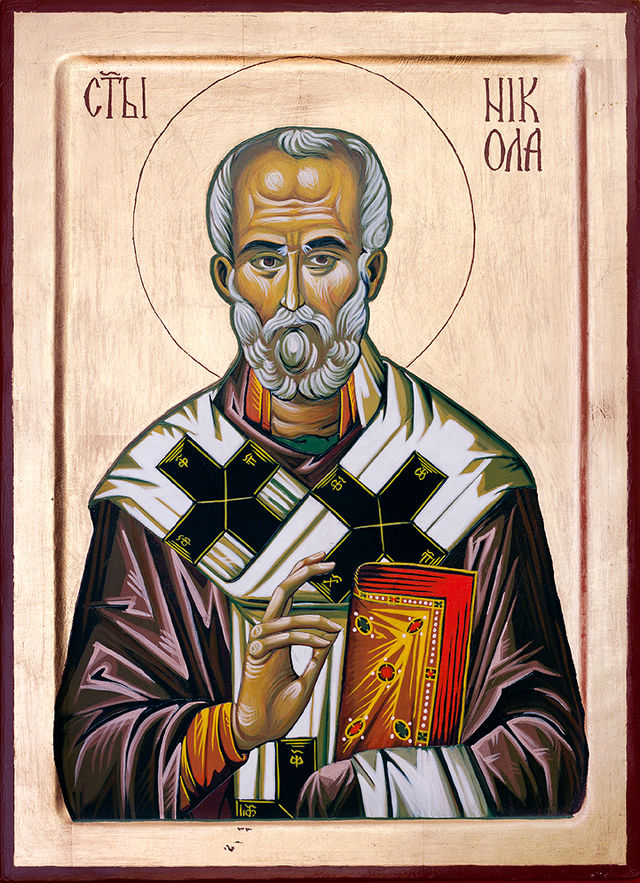
St. Nicholas of Myra Icon
Source: Shutterstock
Icons – as a form of religious painting – are also common in Serbian households and are located on the eastern wall, in the living or dining room. First of all, there is an icon of the family patron saint, furthermore the sacred images of Christ Pantocrator (a specific depiction of Jesus), and Theotokos (God-bearer) as the term used for a form of Eastern icon depicting Madonna and Child. Among the Serbian families the most popular and most celebrated saints are St. George, St. Nicholas of Myra, St. John the Baptist, and Archangel Michael. Each saint has its own feast day, the date of which differs in the Gregorian and Julian calendar. In the case of the Serbian Orthodox Church, the Julian calendar is still in use, which alters 13 days from the Gregorian. For example, according to the Gregorian calendar, the orthodox feast day of St. Nicholas of Myra is on 19 December, while the Catholic Church celebrates it on 6 December, as St. Nicholas's Day. According to the Gregorian calendar, Orthodox Christmas is celebrated on 7 January, and the New Year comes on 13 January. Easter, as a so-called movable feast day, sometimes coincides in the two calendars.
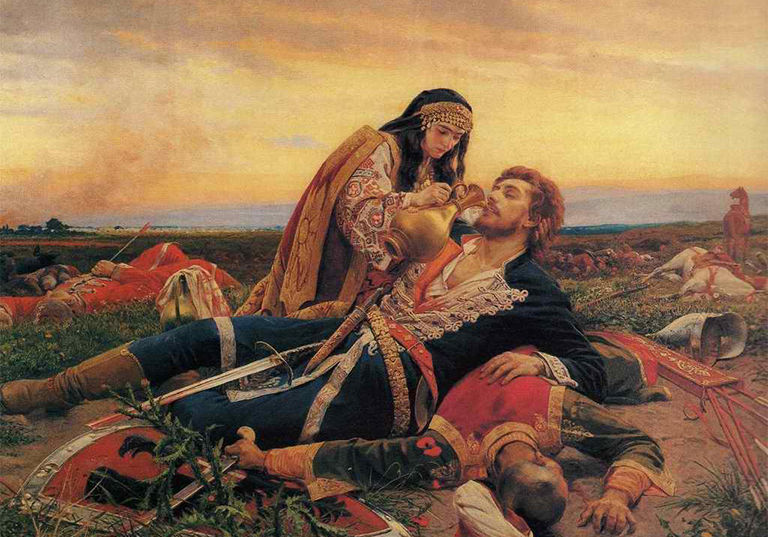
History and traditions often mix together, therefore some of the feast days in Serbia have greater significance due to the events which occurred on these dates. For example, St. Vitus's Day (Vidovdan – 28 June according the Georgian calendar), is a particularly important date in Serbian history. In 28 June, 1389 the Serb army was defeated by Ottoman Empire at the Battle of Kosovo. The battle itself and the myth related to it became a crucial part of Serbian national identity. Not surprisingly, there are many events in the twentieth century which occurred on Vidovdan – among others, the 1914 Sarajevo assassination of the Austro-Hungarian Archduke Franz Ferdinand and his wife, Duchess Sophie Chotek of Austria; in 1921, the adoption of the first constitution of the Kingdom of Serbs, Croats and Slovenes (the so-called Vidovdan Constitution); Slobodan Milošević's Gazimestan speech in 1989, and in 2001 he was also handed over to the Hague Tribunal on this day.
Slava in practice
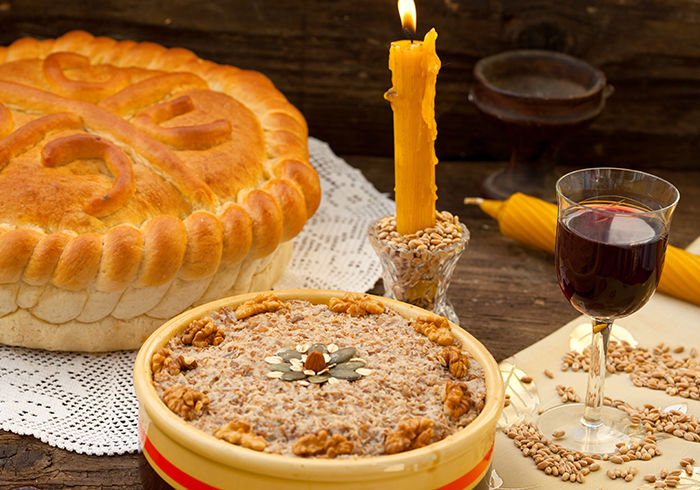
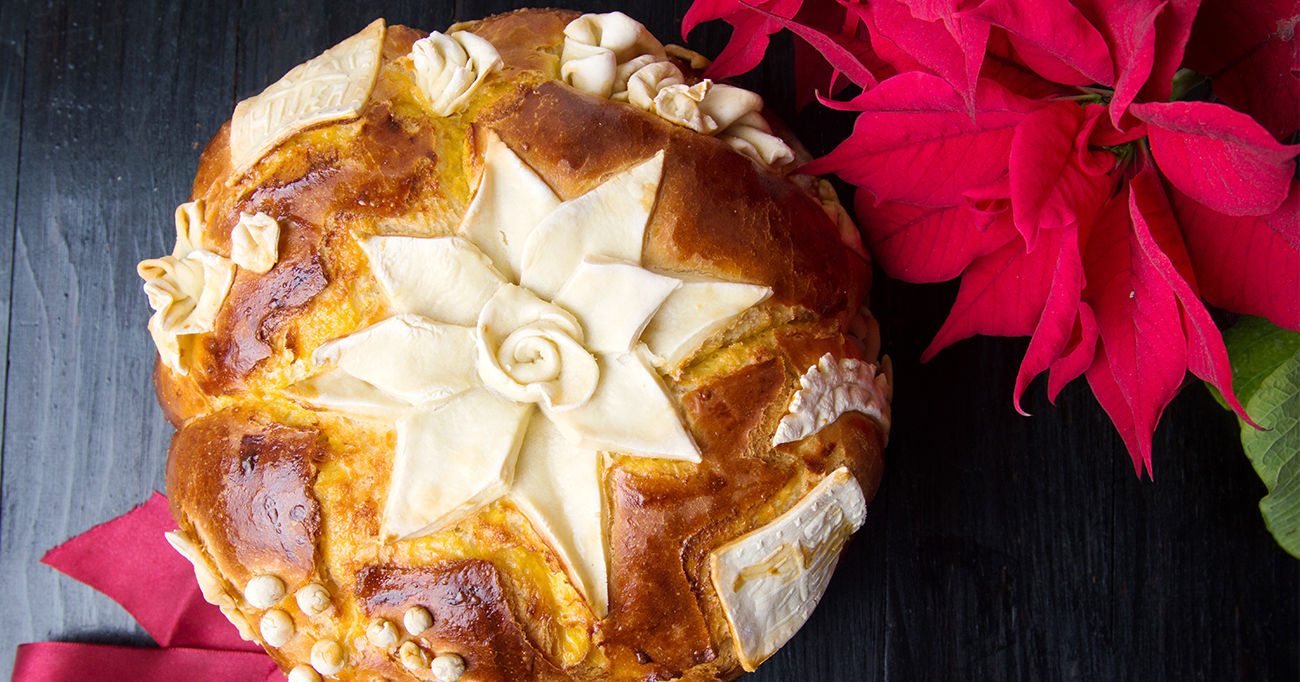
Slava is an important holiday in family life and is celebrated among friends as well. On the day of the patron saint, the family usually goes to church service where the priest blesses their slava-cake (a special bread made for this occasion) and the so-called koliva which is a dish of minced boiled wheat. These are the main meals served for Slava that have a symbolic meaning: the bread and wine represent the body and blood of Christ, whilst koliva represents resurrection and eternal life. The host, within prayers and in presence of the rest of the household, lights the slava candle which stands at the dining table during the festive meal. Habits for Slava differ from one community to another. In some cases the priest comes to the household, blesses the house and the meals prepared, and in some more traditional communities the cake is made with holy water and decorated with prosphora seal or some other shapes. On the family patron saint’s day, the door of the household is open to everyone. Relatives and friends visit each other, so it often happens that the celebrating house is crowded with guests during the entire day. It is customary that the guests bring a bottle of red wine and say My host, I wish you happy Slava! (Srećna slava domaćine!) greeting at the entrance door where the host and his wife await them with red wine and koliva.
Preparation for Slava
Source: Shutterstock
Slava can also be the celebration of the patron saint on an entire guild, community – for example, a village or town – or the guardian of a church. Nowadays, besides certain professions – St. Sava is the patron saint of education, St. Cosmas and St. Damian are of medicine – in Serbia the political parties also have patron saints, whose day is celebrated within the party. Serbian law also regulates the given day as a bank holiday for every individual who declares the commemoration of the specified patron in his/hers family.
Family patron saints remain an important part of Serbian ethno-cultural identity which bring together family members and friends, while also strengthening ties within the community. However, the concept of Slava – especially in some more secular families – is losing more and more of its original traditional, orthodox aspects (e.g. attending the church service, preparing only fasting food if the family patron is during the fasting period). According to tradition, Slava should be held at the family home, nevertheless, nowadays some make big parties in restaurants, as Dragomir Antonić etnologist wrote: “if slava loses its ecclesiastical character, it becomes a simple feast."
The opening pic is by Creative Family/Shutterstock