Since 2007, Serbia officially maintains its status as militarily neutral country, this was also one of the main topics at the Belgrade Security Forum this October. Serbia preserves an active relationship with Russia, Turkey and NATO, and has also started its EU integration process. Starting from February 2009, Serbia and Russia, and since January 2017, Serbia and China have introduced 30-day visa-free entry on a mutual basis. How and for how long can these multilateral international relations be balanced?
One of the most important foreign policy objectives for Serbia is the EU integration process – more precisely, the opening of new accession chapters – but the country also maintains active contacts with many other actors of world politics. Amongst others, we should mention Turkish President Recep Tayyip Erdoğan's recent two-day visit to Serbia. Together with Erdoğan, ten ministers and nearly 200 entrepreneurs visited the Serbian capital, and 16 co-operation agreements (on, among others, trade, duty-free shipping, transport and infrastructure) have been signed. Erdoğan also visited the country’s southwestern Sandžak region, inhabited mostly by Muslim Bosniaks, where he was welcomed with Turkish flags and enthusiastic masses. Erdoğan visited Novi Pazar for the second time. The people of the Sandžak see the relationship between Serbia and Turkey very positively, not only regarding its impact on the commercial, infrastructural and cultural development of the region, but also due to the fact that the majority of the Bosniak families have close relatives living in Turkey.
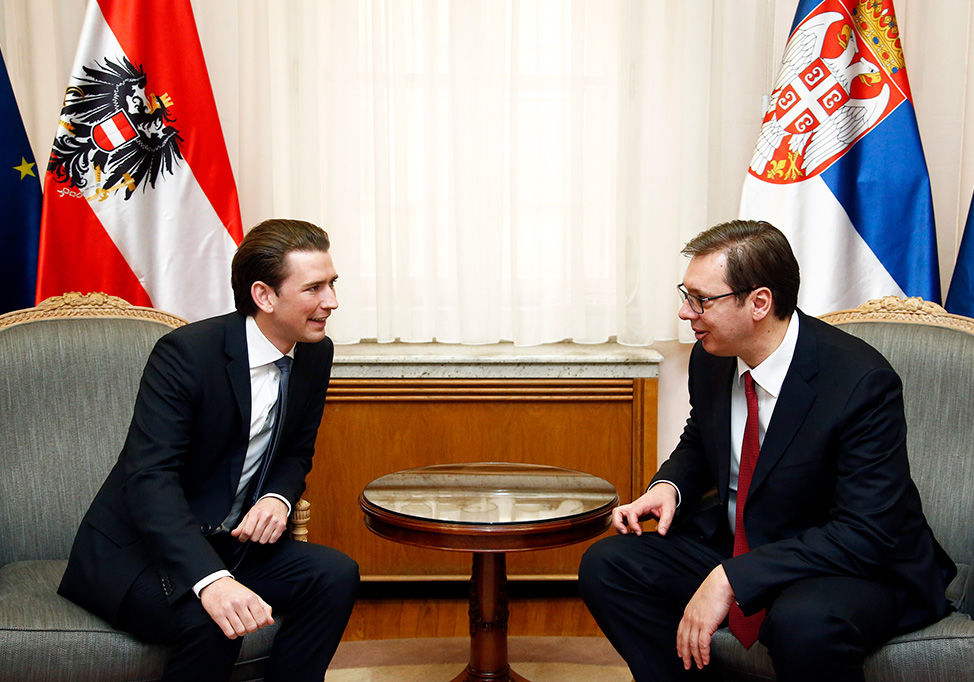
The Serbian leadership also has good relations with Sebastian Kurz, the former Foreign Minister and new chancellor of Austria. Serbian President Aleksandar Vučić has met him several times during the past years regarding the Balkan migration route, while in February 2016, the two countries accepted an action plan of joint cooperation. Kurz was among the first state leaders who congratulated Vučić for winning the Serbian presidential elections held in April. This was returned by Vučić last week with a multilingual twitter post: "Dear Friend, I congratulate you on your victory. I hope that the relationship between Serbia and Austria will be even better in the future."
February 2017 – Working visit of Sebastian Kurz, then Austrian Minister for Foreign Affairs to Serbia, where he met with Aleksandar Vučić, then Serbian Prime Minister
Source: Flickr, Dragan Tatic, licenc: CC BY 2.0
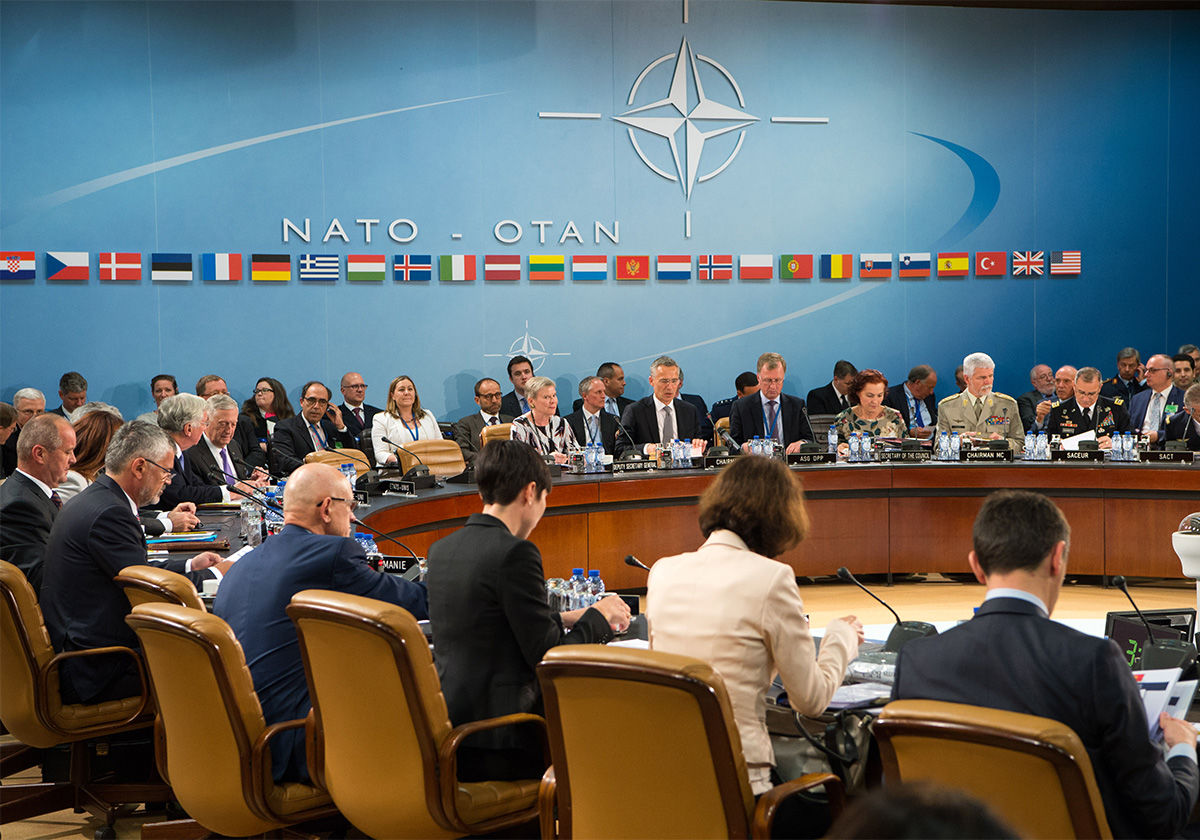
Although an EU member state, Austria is not part of NATO, which is seen as a favourable fact for many in Serbia. Irrespective of the country's effort to meet the EU requirements and speed up the EU integration process, NATO membership is not encouraged. The 1999 NATO air strikes against Serbia have left a deep mark on the society. According to some surveys, 84 percent of the population opposes Serbia’s eventual accession to the North Atlantic Treaty Organization. Aleksandar Vučić stated in March at the 18th anniversary of the NATO bombing, that Serbia is not a NATO member and does not want to become one – a fact that has been strengthened by several Serbian politicians during various negotiations or statements. Nevertheless, since 2006, Serbia has been a member of the NATO Partnership for Peace program, and in 2015 Serbia has signed the Individual Partnership Action Plan, according to which NATO soldiers can travel through Serbia and use the Serbian military’s infrastructure. There is also an important international peacekeeping force under NATO command in Serbia’s close vicinity, the Kosovo Force (KFOR) in Kosovo. In accordance to UN Security Council Resolution 1244, KFOR is responsible for maintaining security and order in Kosovo.
Serbia does not want to become a NATO member but maintains multi-level relations with the North Atlantic Treaty Organization
Source: Flickr, DOD photo by U.S. Air Force Staff Sgt. Jette Carr, licenc: CC BY 2.0
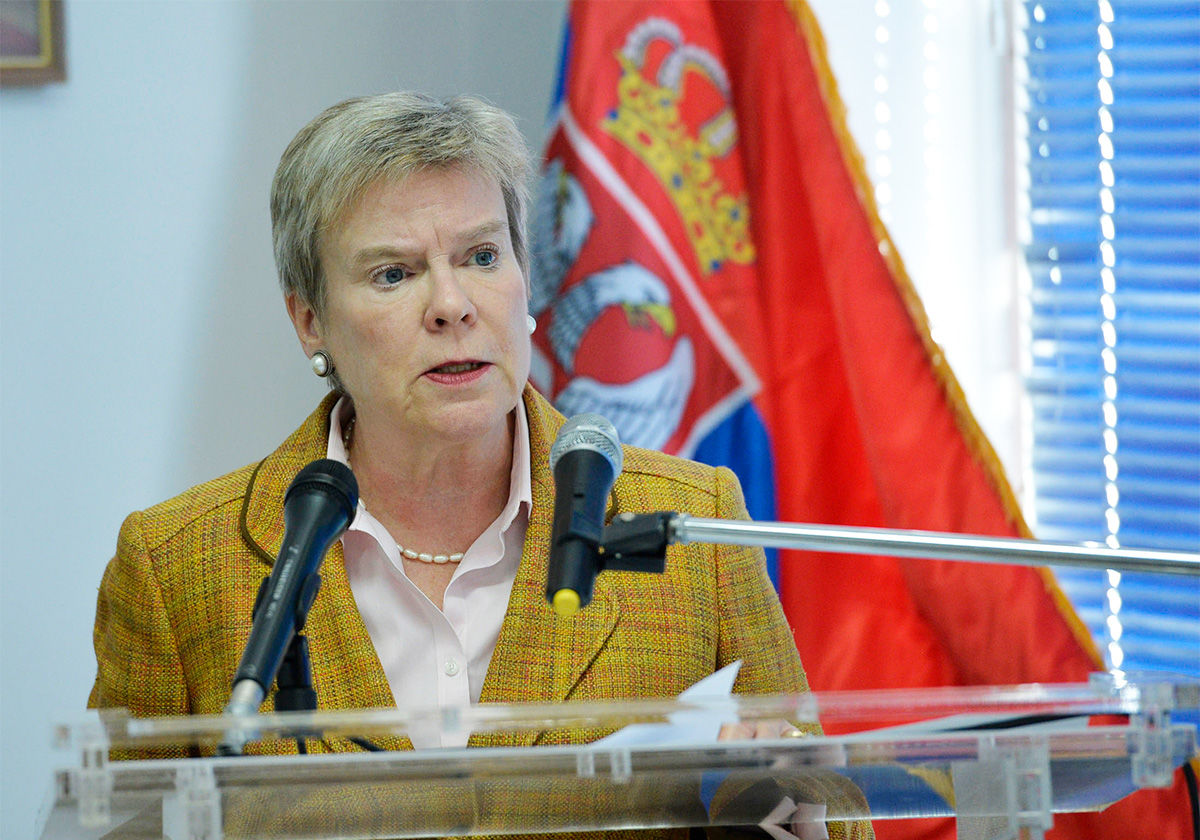
Within the framework of the NATO Partnership for Peace, Serbia has participated in 24 military exercises, mainly as an observer. According to some reports, in 2018 a military training will be held for NATO partner countries in Serbia, under the cover name of Regex-18. Serbia has also conducted military exercises with Russia – so far there were six – while six, formerly Russian, MiG-29 fighters were officially handed over on 20 October to the Serbian Airforce, at the military parade organized to commemorate the anniversary of the liberation of Belgrade.* Russian Minister of Defence Sergey Shoygu was also present at the event. The fighters were given to Belgrade as a gift from Moscow, but Serbia will have to invest around 185 million Euros in order to refurbish the planes. The Russian-Serbian relationship acts as a hurdle for Serbia’s EU accession and NATO cooperation, however according to Belgrade’s viewpoint this relationship does not affect the country's EU integration. Serbia’s goal is to join the European Union, and there is no successful integration without regional stability, what is more, Belgrade will do its utmost to tighten relations with the countries in the region, said Serbian Prime Minister Ana Brnabić at the Belgrade Security Forum. The Forum was also attended by NATO’s Deputy Secretary General Rose Gottemoeller, who explained that NATO understands Serbia's military neutrality and deeply regrets the civilian casualties of the NATO bombing in 1999. She emphasized the need to remember the past, while also looking towards the future.
Rose Gottemoeller NATO Deputy Secretary-General during an earlier visit to Serbia
Source: Flickr, NATO, licenc: CC BY-NC-ND 2.0
Serbia also maintains bilateral relations with China. On January 16, 2017, the visa-free travel regime between China and Serbia entered into force, allowing a mutual, visa-free stay for up to 30 days for the citizens of both countries. In 2016, during the visit of Chinese president Xi Jinping to Serbia, the two sides signed several agreements aimed at deepening cooperation. In 2014, Hungary, Serbia and China signed an agreement about the modernization of the Budapest-Belgrade railway line. The construction of the railway line will also be discussed at the Summit of China and Central and Eastern European Countries, which will be held in Budapest in November.
On the road to the European Union, Serbia is relatively well balancing among the great political powers, and it wants to maintain this direction in the years to come. Serbia’s foreign policy position is stronger than before, but the European road does not mean that Serbia’s good foreign relations with Russia or China should be abolished, said Serbian Foreign Minister Ivica Dačić.
* The 73rd anniversary of the liberation of Belgrade was celebrated this year. On 20 October 1944, after 11 days of fighting, the Yugoslav People's Liberation Army and the Red Army took control over the former Yugoslavian capital. In order to celebrate this anniversary, a military parade is traditionally held in Belgrade. During the 2017 parade, a military exercise under the cover name “Liberation” was conducted with more than 2,200 soldiers, 130 motor vehicles and 30 aircraft and helicopters involved.
The cover image comes from Wikipedia. License: CC BY-SA 3.0, author: Slobodan Kovrlija/Rokerismoravee.