Kategória: Research Blog
Forrás: https://digitalistudastar.ajtk.hu/en/research-blog/serbia-and-kosovo-on-the-road-of-reconciliation
Serbia and Kosovo
On the Road of Reconciliation?
Szerző: Dianna Horvát,
Megjelenés: 10/2017
Reading time: 8 minutes
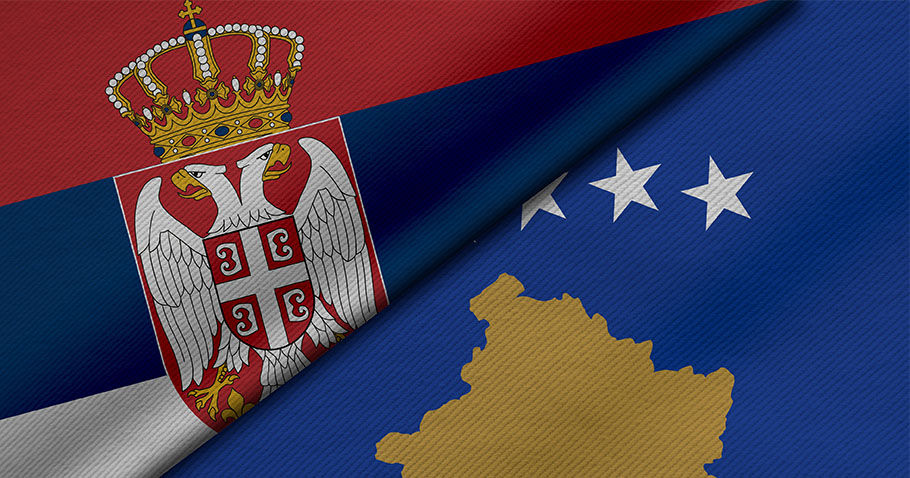
Serbia and Kosovo’s relationship is quite complicated. Kosovo—which is in constitution of the Republic of Serbia as the Autonomous Province of Kosovo and Metohija—declared independence in 2008. Serbia and some other countries—among them Russia, China, and five EU Member States—does not recognise Kosovo’s independence. Through the years, the relationship between the two has seen its share of somewhat burdensome tensions. Yet, the forthcoming period presents an opportunity to move towards reconciliation for a common goal independently: joining the European Union.
For Serbia, Kosovo is part of its territory, and Kosovo views Serbia as its neighbour. Over the course of history, the territory of Kosovo has been a part of several countries, including the Roman and Byzantine Empires. In the 12th century, it became part of the Kingdom of Serbia and later fell under the centuries-long rule of the Ottoman Empire. In the 13th century, Prizren, a city located in today’s Kosovo, was the Serbian royal headquarters, and Peć was the seat of the Serbian Orthodox patriarch. There are numerous Serbian orthodox monasteries and cultural legacies in Kosovo, which have been the focal point of conflict several times through history—most recently after the Kosovo War. In order to understand the present relationship between Serbia and Kosovo, one does not have to go back to the Battle of Kosovo (1389), it is enough to take a look at recent events.
Between the two World Wars, the territory of Kosovo changed hands several times, and thus the demographics of the Serbian-Albanian population have changed as well. The area became a part of Yugoslavia in 1945 as the Autonomous Province of Kosovo and Metohija. The independence aspirations of Kosovo Albanians (commonly called Kosovars) began to unfold in Yugoslavia, and after the death of Josip Broz Tito, it strengthened further. One year later, in April 1981, under the rallying cry “Republic of Kosovo!”, student protests broke out in Pristina. After the violent dispersal of demonstrations, the situation in Kosovo became increasingly destabilized, and Serbian-Albanian tensions intensified. After the Anti-bureaucratic revolution in 1989, Slobodan Milošević overthrew the autonomy of Kosovo and Vojvodina in Serbia, and in 1991 the Yugoslav Wars began, which led to the breakup of Yugoslavia, claimed more than a hundred thousand casualties, and left behind issues that the successor states have not yet been able to resolve among themselves.
Kosovo from the 90s to the Proclamation of Independence
Approximately 10 years before the independence of Kosovo, after the Kosovo War and the 78-day NATO bombing of Yugoslavia, on 10 June 1999, UN Security Council Resolution 1244 was adopted. According to it, Belgrade had to pass over the administration of its province of Kosovo and Metohia to the United Nations Interim Administration Mission in Kosovo (UNMIK) and the Kosovo Force (KFOR). These conflicts also had demographic consequences, as between 1998 and 1999 hundreds of thousands Kosovo Albanians, Serbs, and other nationalities fled Kosovo. According to the above-mentioned Resolution 1244, the safe and unimpeded return of all refugees and displaced persons to their homes in Kosovo was up to the UN to guarantee; however, a significant part of Kosovo Serbs did not return to their former homes. This is partially due to the constant conflicts between the Serb and the Kosovar population, as well as the economic challenges of the region. The migration of Serbs and the Albanians’ greater immigration to Kosovo have their roots as far back as 1690s, with the Great Migrations of the Serbs, led by Serbian Patriarch Arsenije III Čarnojević. Furthermore, a result of the demographic changes and wars of the 20th is that today Kosovo’s 1.8 million population is 92% Albanian and 8% Serbian or other nationalities.
Serbia and Kosovo’s future accession to the EU
2008 was a significant year for the Balkan region. On 17 February 2008, Kosovo proclaimed its unilateral independence—which Serbia has not yet recognized—and on 29 April Serbia signed the Stabilization and Association Agreement with the EU. Following the proclamation of Kosovo’s independence, there was a stalemate between the parties for a long time (Serbia turned to the International Court of Justice for an advisory opinion, which ruled that the declaration of independence of Kosovo did not violate general international law). In the long term, however, the lack of communication only exacerbates the situation, because the stagnation of the dialogue increases the possibility of further conflicts and consequently restrains economic development, international openness, and the EU integration process. In 2011, the first bilateral negotiations between Kosovo and Serbian authorities started with the monitoring of the EU. The ongoing Belgrade–Pristina dialogue seeks solutions for a number of issues, such as the implementation of the Community of Serb Municipalities, which has not yet taken place. However, the Serbian side is optimistic about the continuation of the dialogue, as in the upcoming months, after a longer break, the officials will once again gather around the negotiating table. It is of key importance to talk more seriously and boldly about future relations, according to president of Serbia Aleksandar Vučić. Both the Belgrade–Pristina dialogue and the Brussels agreement—which was established in 2013 as a result of the negotiations between the two countries—promote EU integration, which is significant for both countries.
Serbia started EU accession negotiations in January 2014; during the process, 35 chapters will be opened and examined to see if Serbian legislation is in accordance with the EU rules. In regards to Serbia’s EU accession, the final 35th chapter, called Other business: Normalisation of relations between Serbia and Kosovo, is considered the most difficult one. Although it has not been formally, indirectly, or directly stated that recognizing Kosovo’s independence is a prerequisite for Serbia’s EU membership, this assumption is becoming increasingly common in Serbian public opinion and the media. Kosovo signed the EU Stabilization and Association Agreement in October 2015. The integration into the Union is certainly a major step toward the rapprochement of Kosovo and Serbia, but there are still many open questions, and new points of contention emerge frequently—for instance, the discussion about Kosovo’s UNESCO membership, or the election of Ramush Haradinaj as the Prime Minister of Kosovo. During the 1998–1999 Kosovo War, Haradinaj was a commander of the Kosovo Liberation Army, and Serbia accused him of war crimes. Lastly, the proposals made by Kosovoan authorities—which Serbia strongly opposes—that Kosovo may have its own military by the end of the year, do not help alleviate the situation.
The Relationship between Kosovo and Serbia within the Western Balkans Fund
As mentioned above, EU accession is a key factor that will hopefully bring Serbia and Kosovo closer to each other, but there are other initiatives—civil, cultural and educational—that encourage cooperation. Examples include both initiatives by non-governmental organizations as well as the Western Balkans Fund.
At the Bled Strategic Forum in Slovenia in September, about seventy countries discussed, among others, the current situation in the Western Balkans and the region’s EU integration processes. The forum was of great importance to the Balkan countries, because the Western Balkans Fund First Conference of Ministers of Foreign Affairs was also held there. This fund aims to promote stability in the region and to increase cooperation between countries that are in conflict or have an ongoing dispute.
The Western Balkans Fund was initiated by the Visegrad Four in 2015. It is based on the model of the Visegrad Fund, which has been operating successfully since 2000. The Fund headquarters are in Tirana and its members are Albania, Serbia, Bosnia and Herzegovina, Macedonia, Montenegro, and Kosovo. The Western Balkans Fund seeks to promote cooperation between Member States in the fields of cross-border and interregional projects in education, culture, research, and development. It is hoped that this will, in the medium term, help their joint effort on the international stage, as well as their EU integration. According to the agreement, for the implementation of the projects, partner countries will contribute thirty thousand euros annually, with added support from the Visegrad Group. However, in the long run, the initiative may have a more profound effect. In order to apply for the grant, the joint application of at least two member countries is needed, which is likely to encourage cooperation between Serbia and Kosovo.
The very fact that the Western Balkans Fund includes Serbia and Kosovo is promising regarding mutual reconciliation. Although the Serbian National Assembly approved the formation of the Fund in November 2016, several opposition party deputies have voiced their disapproval before it was adopted. According to the Serbian Radical Party and the Democratic Party of Serbia, with this move their country has taken a step towards recognizing Kosovo’s independence. Regarding this matter, Minister of Foreign Affairs of the Republic of Serbia, Ivica Dačić, said that participation in the Western Balkans Fund does not mean the recognition of Kosovo’s independence, since the text of its founding document has an asterisk after Kosovo’s name, representing a footnote that is in line with Resolution 1244. Through the above-mentioned Belgrade–Pristina dialogue, in 2012 the parties agreed that on the international scene Kosovo will refrain from using the word “Republic” in its name, and Serbia will take part in international negotiations and forums where Kosovo is also represented. In accordance with this agreement, they are also jointly engaged in the Western Balkans Fund.
Stay Tuned: Western Balkans Fund Activities about to START!
At the Bled Strategic Forum in 2017, the Serbian Minister of Foreign Affairs stated that the Western Balkans Fund is an important institution which will help the participating countries engage more and cooperate in areas that have heretofore seen no joint action, such as culture or research. According to the official website of the organization, in May 2017, all partner countries ratified the Western Balkans Fund agreement, and soon the first projects and grants will be announced. Will this co-operation, based on the V4 model, help reduce tensions in the Balkans, and maintain or develop good neighbourly relations? In this regard, it will be interesting to monitor the implementation of the Fund’s objectives in practice.
The reconciliation between Kosovo and Serbia is a process taking place on several levels. Whether it will ultimately happen through the political or the civil sphere cannot be foreseen yet. However, no matter which way it comes from, the normalization of the Serb–Kosovo relationship is a very important move in ensuring stability and security not only regionally, but also on a European level. Hopefully, in the near future, the Unity in Diversity EU motto will also be applicable to the relations between Serbia and Kosovo.
Opening pic by Shutterstock