Kategória: Research Blog
Forrás: https://digitalistudastar.ajtk.hu/en/research-blog/scotland-to-postpone-independence
Scotland to Postpone Independence
Szerző: Bocskor Kitti,
Megjelenés: 11/2017
Reading time: 8 minutes
Nicola Sturgeon has been advised to delay the fight for independence and focus instead on Brexit and domestic policies.
The Scottish National Party lost 21 of its previous 56 Westminster seats in this year’s election, giving the SNP conference a sombre atmosphere. Important figures to lose their seat included Alex Salmond, the party’s former leader and first minister, and Angus Robertson, the SNP’s former Westminster leader and one of the most dominant figures in the House of Commons.
Many speculated that the reason for the loss was the First Minister’s insistence on a second independence referendum. Although the Scottish Parliament backed Sturgeon’s demand for the vote in March, the PM refused to enter into discussion about it, and thus the issue was stalled. In the end, the insecurities may have been too much for the voters. “None of the questions raised by Brexit are answered by ripping Scotland out of our own union of nations,” said Ruth Davidson, leader of the Scottish Conservatives.
Recently, at the SNP conference, Ian Blackford, the party’s Westminster leader, urged Sturgeon to make Brexit and promoting Scottish domestic policies her most important priorities instead of Scotland’s independence. He also suggested that setting a target date for a second referendum meant “putting the cart before the horse,” and argued that “we need to know what will happen with Brexit, what is going to be the outcome of the Brexit negotiations, but the second thing is we need to set out a vision of what kind of Scotland we expect to see.”
The domestic policies mentioned by the SNP raise further difficulties. Sturgeon is facing a huge financial challenge if she wants to meet election promises, such as extra funding for the NHS, higher spending for schools, and lifting the cap on the public sector. Economists estimate that a 3% increase in Scottish public sector pay could cost £400m a year. This could force the Scottish government to trigger an emergency borrowing clause in a deal with the Treasury to unlock £600m in extra funding. This may sound a bit extreme, but economic concerns were the most important reasons why people voted No at the last independence referendum. If the SNP wants to succeed next time, they will need to prove that they are capable of managing Scotland and worthy of the trust of the people.
As of today there has been no clear date set for the next referendum; Sturgeon tentatively scheduled it in the early 2020s, possibly before the end of this Scottish Parliamentary term in 2021. Although the ‘reset’ button has been pressed on independence, the issue has not been taken off the table.
Much will depend on the Brexit negotiations, which could very well last longer than the original two-years’ timeframe that everyone expected. Pete Wishart, the SNP’s longest serving MP, claimed that the optimal time to stage the vote would be after the Brexit transition period. He argued that voters are more likely to realise independence is their best option if they have a chance to experience the damage caused by Brexit first. “People will want to review their constitutional options and at that point the case for independence becomes compelling,” he said.
So what does this all mean in reality? One, “indyref2” is on hold for the moment. Two, there is also no urgency about demanding that Westminster transfer the necessary power to hold such a referendum under Section 30 of the Scotland Act. And, most importantly, three, Nicola Sturgeon intends to revisit this question once the Brexit negotiations are over.
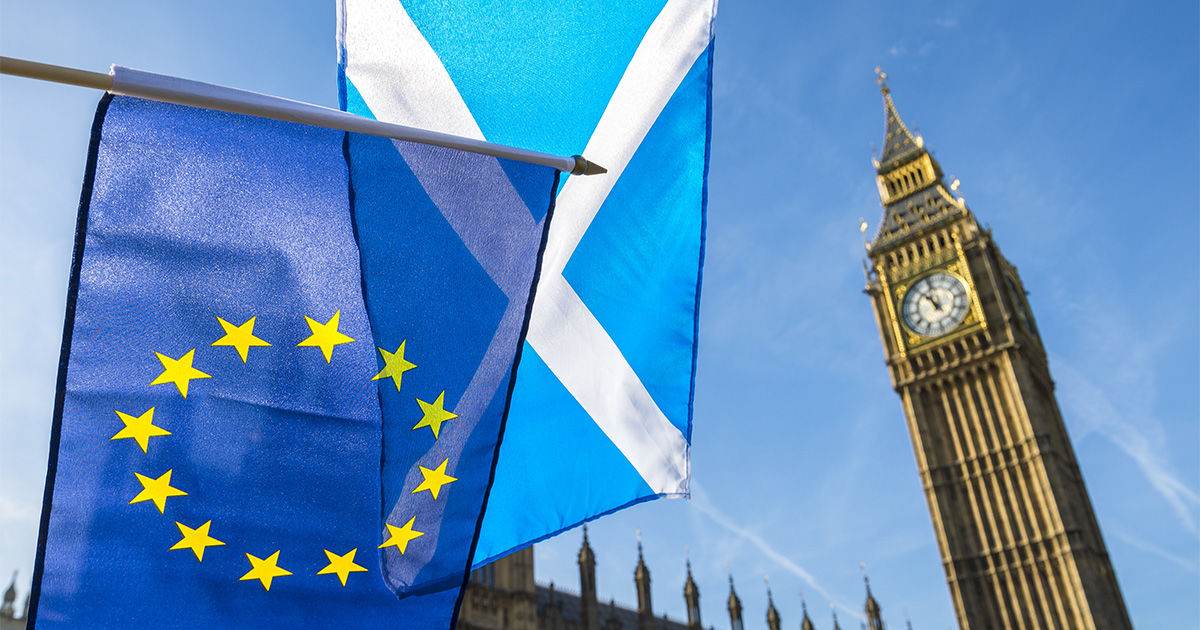
Opening pic: Shutterstock