Kategória: Research Blog
Forrás: https://digitalistudastar.ajtk.hu/en/research-blog/rhinos-in-the-spotlight

Rhinos in the spotlight

Exploiting South Africa's rhino population


Szerző: Molnár Zsuzsa,
Megjelenés: 03/2018
 Reading time: 12 minutes

South Africa has nearly 20,000 rhinos, of which more than three die every day, due to poaching activities. Poachers are usually young men who risk their lives for the promise of a better life. Rhino poaching is one of the largest crime industries after drugs, arms, and human trafficking. Buyers, mainly from Vietnam and China—who believe that rhino horn powder has beneficial health effects—fuel this huge illegal business.

South Africa has nearly 20,000 rhinos, comprising the 80% of all rhinos in Africa. These animals are among the endangered species; fortunately, private breeders—who own about a third of the population—joined their efforts to preserve their population. Rightly so, as rhinos are in desperate need of protection: as if the severe drought in the last couple of years was not bad enough for them, poaching has been steadily on the rise in the past decade, causing massive loss in the rhino population. In 2007, “only” 13 rhinos were killed, but since 2013, this number rose to more than 1,000 slayed animals per year.

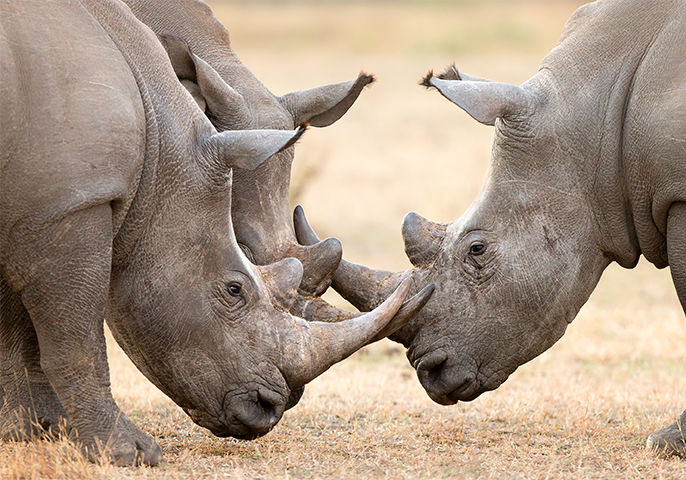
Three White Rhinoceros bulls (Ceratotherium Simum) locking horns in the Kruger National Park, South Africa
Source: Shutterstock

Selling of wildlife products continues to be an extremely profitable global industry; nonetheless, it is completely illegal in most countries of the world. Rhino poaching is one of the largest crime industries after drugs, arms, and human trafficking. One of the most serious security threats posed by poaching and wildlife trafficking is their relationship with organised crime. As rhino horn is made of keratin, just like our hair and fingernails are, it is completely unnecessary and worthless for Africans—and for most regular people, too. Yet surprisingly, in the international black markets, it is regarded many times more valuable than elephant ivory. But what fuels this crazy price and the ever-growing nonsense demand? To answer this question, we need to look elsewhere than Africa, as mainly buyers from Vietnam and China are those who keep this prohibited business blooming.

The Myth

According to some Vietnamese and Chinese myths, pulverised rhino horn consumed in a glass of water can cure headache, fever, high blood pressure, hangover, and even cancer. It is able to detoxify the body, and wine with a touch of rhino horn powder is believed to act like an aphrodisiac. Amazing as it may sound, it still contains the same materials that your hair and fingernails are made of.

Because of its extremely high price, it has also become a status symbol that appears in the wealthiest homes in forms of carved ornaments. Rhino horn business is relatively young—it started in 2007 with the killing of 13 rhinos. Thanks to their eager marketing work, organised crime networks were able to build up and keep the myth/miracles of rhino horn alive. This trend risks to put the rhinos into extinction, as poachers kill more than three rhinos a day since 2013.

The Poachers

The hotbed of rhino poaching is Southern Africa, where poverty is extensive and widespread in society. Usually, poachers are young men who put everything at risk: their freedom and often, their lives. Authorities can shoot them if they are caught red-handed. Still, it is not hard to find reckless man who are ready to turn to poaching for the promise of a better living. They can earn a fortune—in fact, a few hundred dollars. However, what might seem a rather moderate amount to Western people is a considerable income for local poor families and communities.

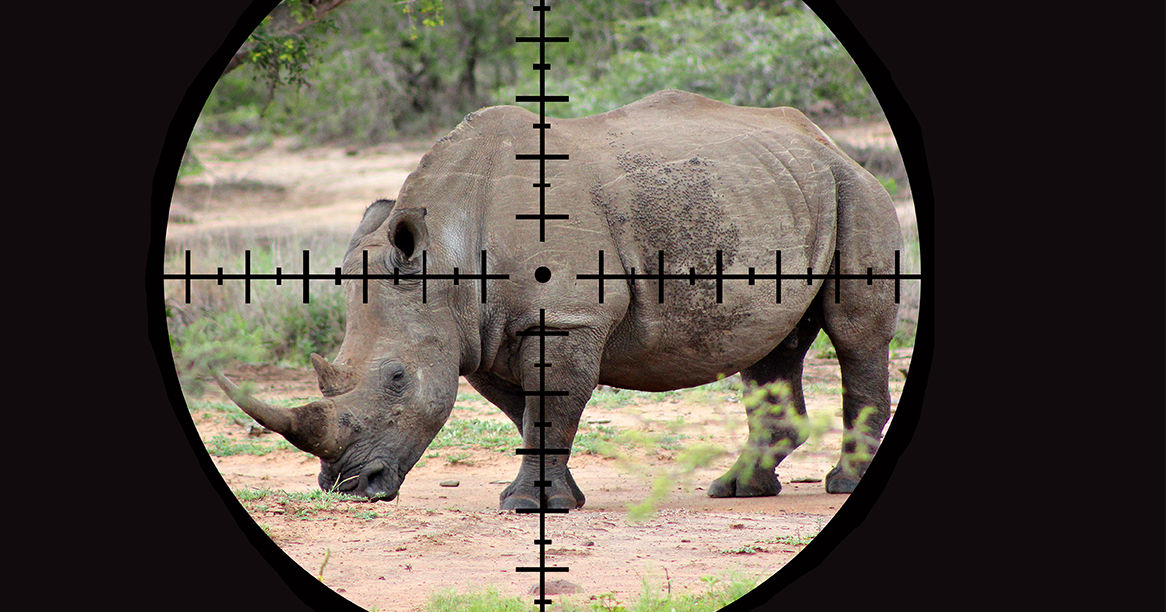
Most of the times, poachers use the same methods when they hunt. They enter the reserve—sometimes barefoot—at night, preferably using the moonlit sky as help, in groups of three or four. Their equipment is rudimentary: a rifle with a silencer, an axe or a machete to cut off the horn, and telephones to warn their helpers outside. Sometimes, they walk backwards or cover their shoes with socks to trick their followers. Most of the times, the cut off horn is quickly sent to the ports of Mozambique and shipped overseas.
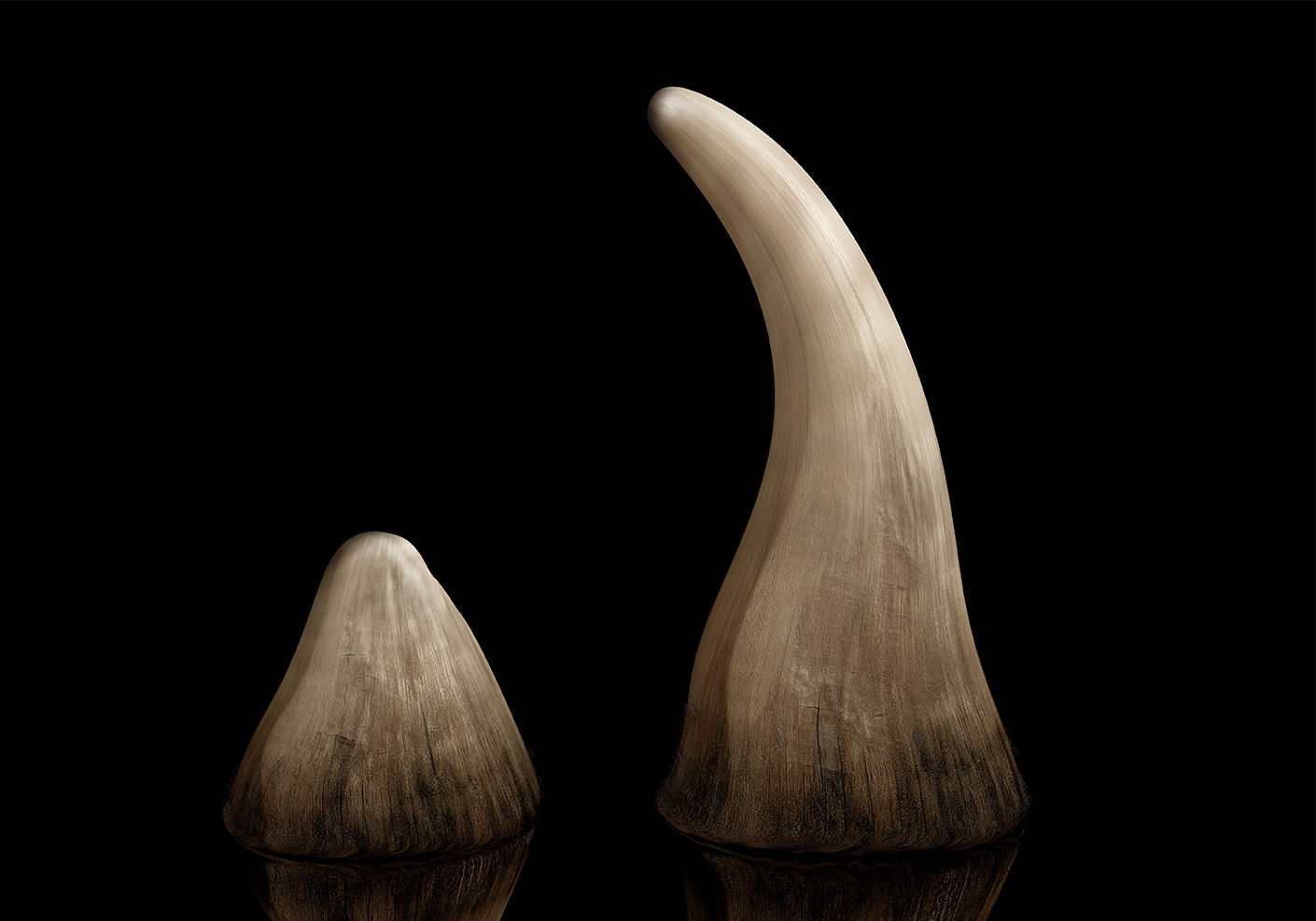
Rhinoceros horn sold on the black market
Source: Shutterstock

Experienced international smuggling networks use the poachers’ local knowledge, and sometimes, they smuggle the trophies along with drugs and other illegal products. Local authorities try to control the situation by shooting and jailing the poachers; naturally, this cannot be regarded as a long-term solution to the problem. It takes just a short time for the well-established crime networks to replace the missing poacher. These people are also exploited, just like the African wildlife and resources.

The Auction

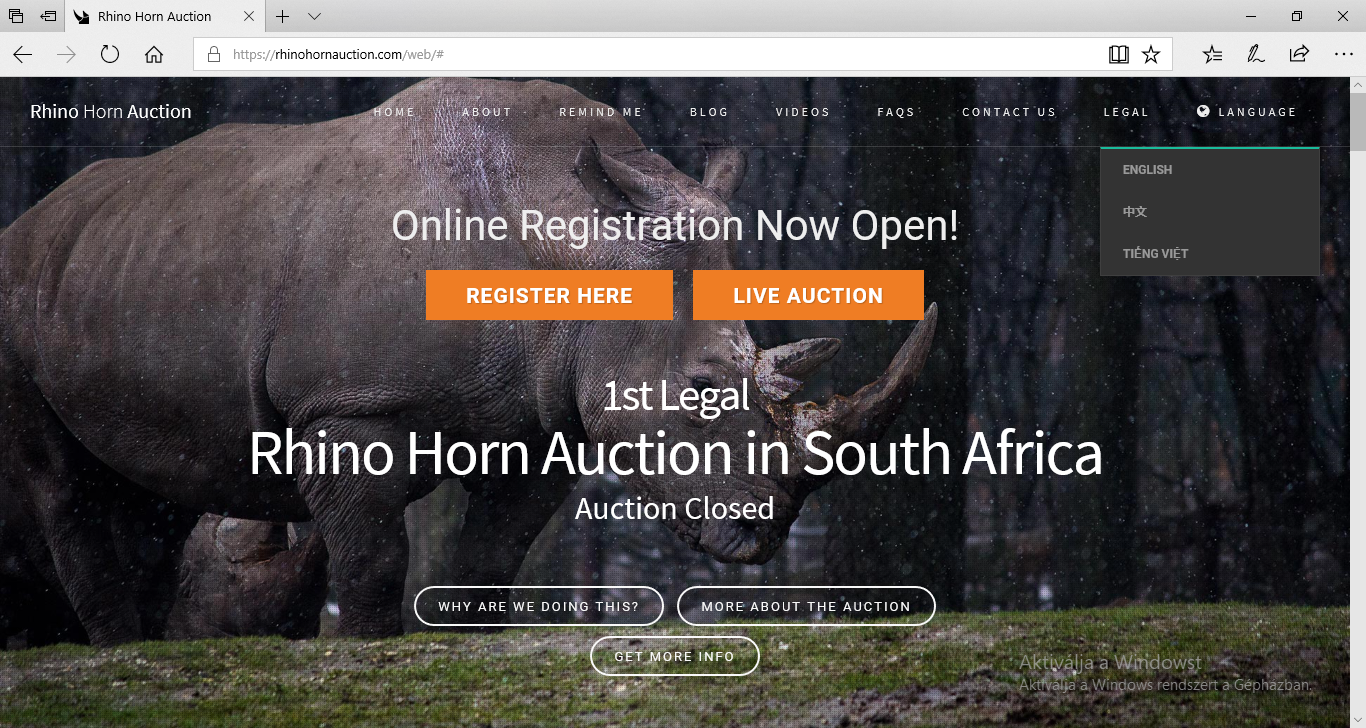
2017 was the year when the first legal rhino horn auction website was launched. It is operated by a South African breeder who owns the world’s largest rhino farm, containing more than 1,500 rhinos. It aims to decrease the number of rhinos killed for their horn. The idea behind this initiative is that if the business is legalised, the price will fall, which is not favourable for the black market. One of the rules is that buyers can only be located in South Africa. However, if we check the website and try to change the language on the top right corner, we can see that its content is available in English, Chinese, and Vietnamese. The most likely explanation is that though the purchaser must be physically in South Africa, the purchased good will very soon leave the country after the auction.

At the last auction, 265 rhino horns were sold weighting 500 kg
Source: rhinoauction.com

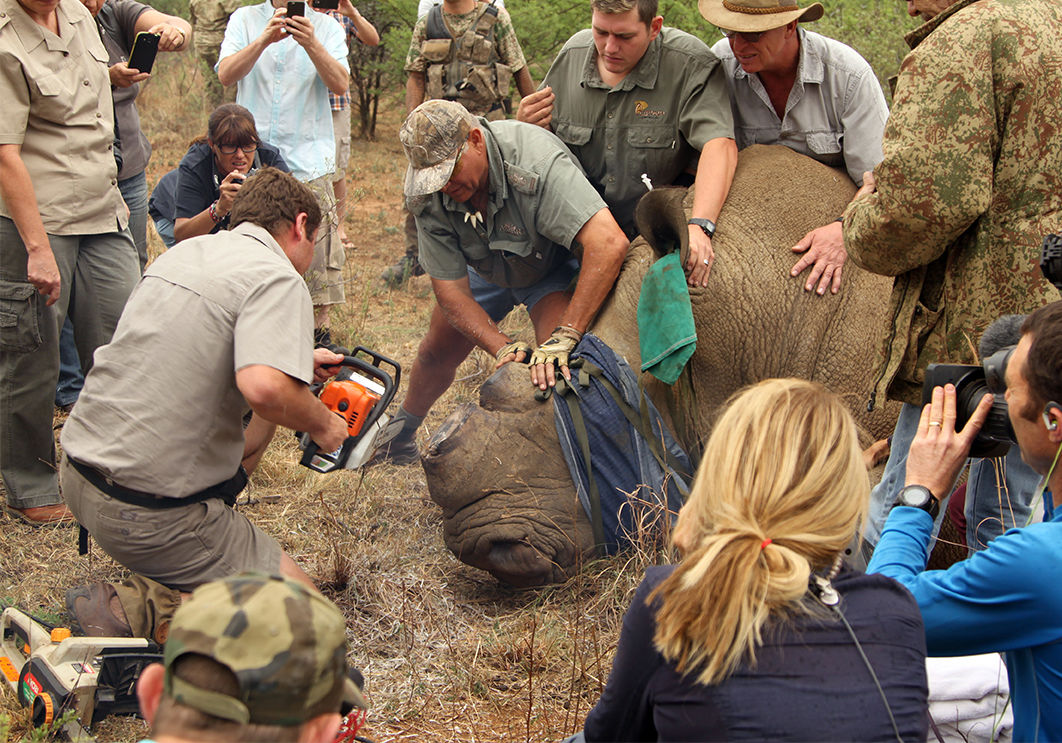
According to a more sceptical theory, it is a well-established business model of the breeders. For safety reasons, they must spend a fortune on the security of rhinos, but at the same time, without horns, these animals are worthless; ergo, they will not be killed. Thus, breeders came up with a solution and cut off the horn of rhinos in order to save their lives. They keep the horn pieces in a secure stock, and at the time of auctions, they sell some of it. In case this plan does not work, the prices will soar again, appreciating the horn stock of breeders. Auctions also give a wide range of opportunities for illegal horns to be laundered and sold in the legal markets. Everybody can decide for themselves whether auctions are really done for the safety of the rhinos or not.

Dehorning of rhinos in South Africa
Source: Shutterstock

The Corruption

Some African countries are especially famous for their high social inequality and elevated corruption rates. Corruption helps to drive wildlife trafficking, and it occurs at all levels, including governmental. This means a security threat both for citizens and the cohesion of the state.

Bribery and corruption
Source: Shutterstock

Its magnitude should not be neglected, especially in the case of Africa, where nation-building is often still in progress, and where democracies are vulnerable. When criminal networks use the platform of politics to expand their activities, they shake the basics of society. In this regard, the impact of wildlife trafficking in South Africa must be taken seriously, and it requires urgent solutions.

The Solution

It is important to suppress poaching and trafficking activities. Legal action must be taken to stop legal and illegal sale. Potential customers must be faced with empirical-based evidence that rhino horn powder does not have any effect on health. At the same time, harming beliefs and cultural practices must be changed in destination countries. For this reason, international organizations and governments must work on awareness-raising. The right educational and marketing activities can deliver the correct information to (future) buyers, and preferably as early as possible, to create a generation of people that understand the value, needs, and challenges of creating a sustainable environment. The solution must be the killing of demand and not the killing of poachers.


Opening pic source: Shutterstock