Kategória: Research Blog
Forrás: https://digitalistudastar.ajtk.hu/en/research-blog/qatar-down-on-its-knees-was-the-last-barrier-lifted-for-a-unified-sunni-arab-front

Qatar Down On its Knees

Was the Last Barrier Lifted for a Unified Sunni Arab Front?


Szerző: Zsolt Csepregi,
Megjelenés: 06/2017
 Reading time: 10 minutes

Three Gulf countries, led by Saudi Arabia and Egypt, conducted a coordinated diplomatic and economic assault against the neighbouring Qatar on the 5th of June. The wealthiest country on the globe, based on GDP per capita adjusted by purchasing power parity, was due to be forced in line because of its subversive foreign policy in the Islamic world.

On Pentecost Monday, the world got a sneak peek into what international coercion means in the 21st century. During the early hours of the day, Bahrein, Saudi-Arabia, the United Arab Emirates and Egypt severed its ties with Qatar in a well-coordinated manouver. The decision was soon followed by Yemen and the Maldives and Gen. Khalifa Haftar, who is controlling the Eastern portion of Libya. In the afternoon, Saudi Arabia has closed off its land border with Qatar, and the subsequent cut off affecting air transfer between the Gulf States and Doha was soon expanded to other sectors of trade and the economy. The justification of the coordinated counter-steps was, according to Saudi Arabia, Qatar’s support for political groups undermining law and order in Sunni Arab states as well as the continuous support of terrorist organizations.

It is an interesting coincidence that before the rapid campaign on Monday, “independent hackers” provided sensitive information to international news outlets on the United Arab Emirates’ Ambassador to Washington D.C. which could very well harm the reputation of the state and create a potential for a rift between the superpower and its Gulf allies. Whether this was a pre-emptive propaganda attack orchestrated by Doha or the sudden isolation itself was the answer to the initiative aiming to harm the reputation of the other Gulf countries will likely remain a secret, but Qatar’s position was not enhanced by its major and highly influential international news organization, Al Jazeera leading the way to disseminate the scandalous information about the Emirates.

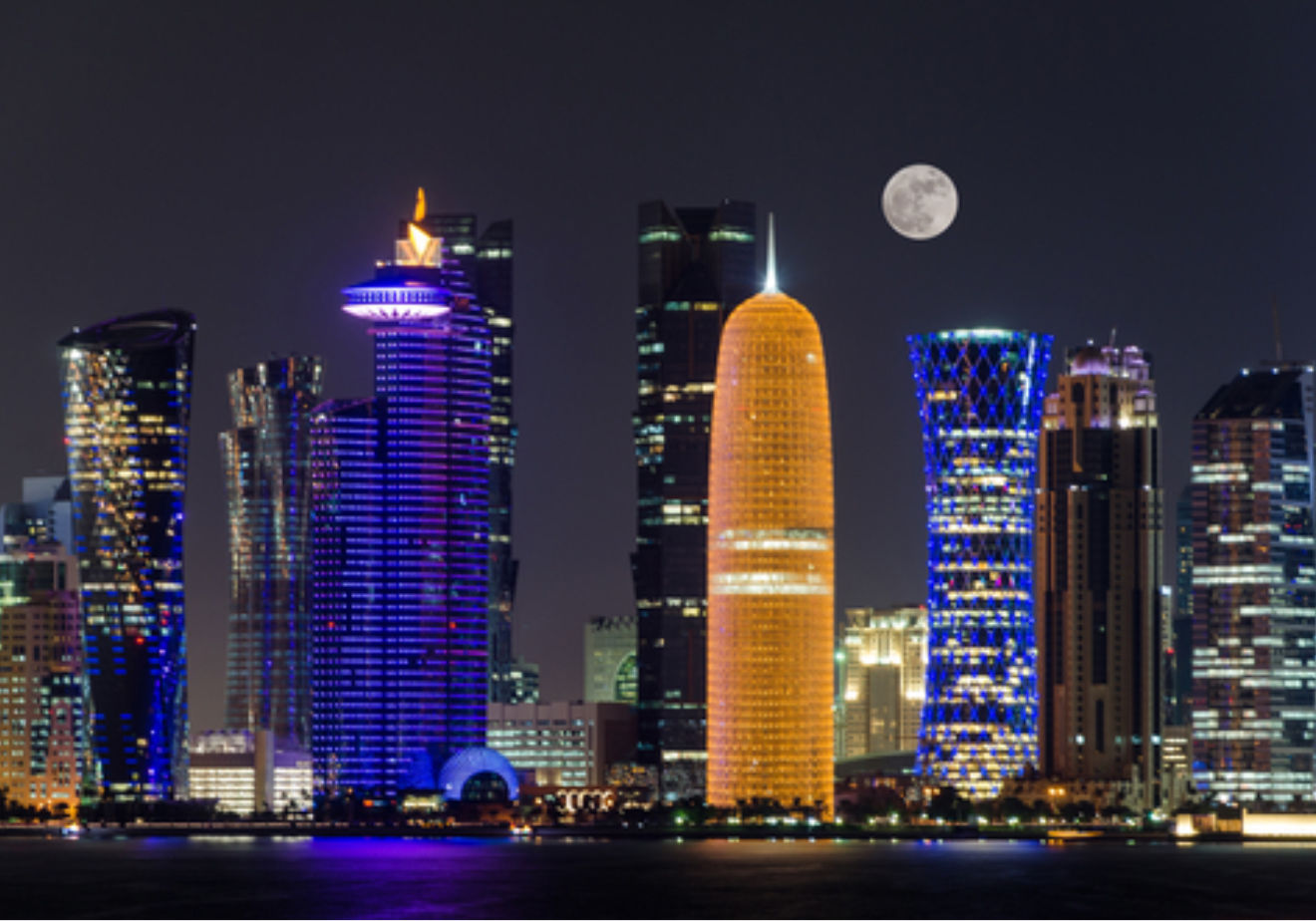
Doha, the Capital of Qatar – an end to its foreign policy ambitions?
Source: Shutterstock

The current diplomatic storm was for a long time coming, thanks to Qatar’s subversive foreign policy. The Emirate, which is, on the one hand, member of the Gulf Cooperation Council (GCC), is supporting a wide array of political groups and maintains connection with regional powers which are incompatible with the foreign policy goals of the other Gulf States. Doha has been committing two types of „high treason” as it is maintaining a rather cooperative relationship with Iran, which is in a tight proxy war against the Sunni Arab world in Syria and on some level in Yemen (although its role is usually overestimated). The true reason for the crisis in the relations is the support for the Republican Islamist forces in the region, such as the different outlets of the Muslim Brotherhood, political forces and terrorist groups such as the Hamas, which, like the Afghan Taliban has a representation in the Capital of Qatar.

Currently in the Middle East, a three-sided geopolitical and political-ideological competition is being waged, with conservative Sunni Arab monarchies and autocratic republics on one side, Sunni Republican Islamist, which, by now, has been largely pushed out from power, reducing the regional influence of Turkey forces on the other, and finally, the Shiite allies of Islamic Republic of Iran are stretching over the Middle East on the third. In this configuration, the balancing act of Qatar cannot be permitted by the conservative Sunni bloc. It is also worthwhile to note that Qatar has been similarly doing favours for Turkey by hosting its first extraterritorial army base, and in the meantime it keeps the US close by having its key military station on its territory.

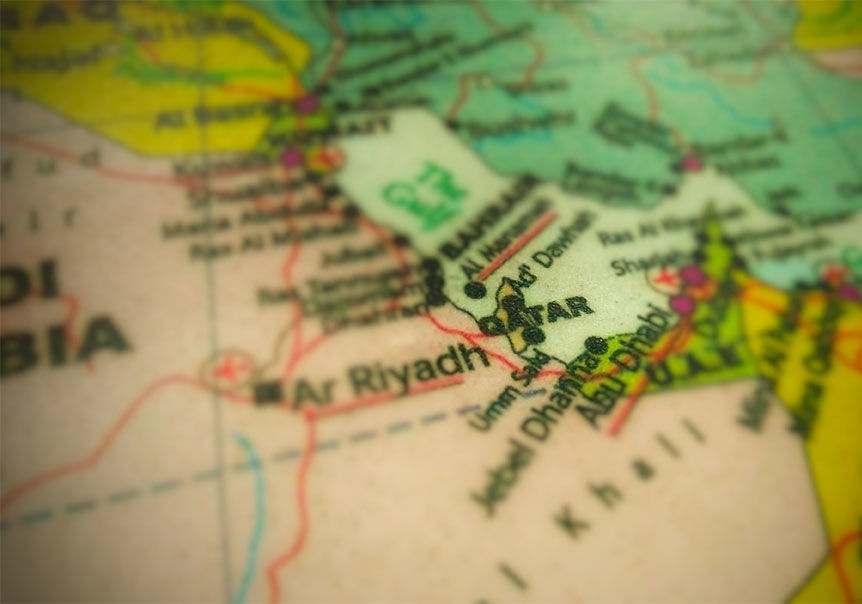
Qatar’s location in the Gulf – a prime example of encirclement
Source: Shutterstock

Qatar’s tragedy is that by having its hydrocarbon reserves, it will not be satisfied by staying a client of Saudi Arabia, like Kuwait and Bahrein, but it lacks the other necessary resources to become a second tier military and economic power like the United Arab Emirates while its geographic position does not provide a “honest broker” position such as Oman’s in the Indian Ocean basin. So, the country had to rely on creative diplomacy. This balancing act seems to have ended. Qatar, which is largely reliant on food import, would happily be supported by Iran, which proclaimed that its ships could deliver food supplies in 12 hours, but this would lead exactly to the one-sided dependence that Qatari leadership wanted to circumvent. Due to the intensive pressure, Doha has signalled that it is “open” to a negotiated settlement, and Kuwait has offered its services to serve as an intermediary between the parties.

To summarize, it remains a question what initiated exactly the coordinated steps by the Gulf States against Qatar, and what role Donald Trump’s recent visit to Saudi Arabia played in the affair, but the unwritten rules of the geopolitical competition in the region guaranteed for a long time that Qatar would be reprimanded for its behaviour. Doha will not have any other choice but to accommodate to the interests of the GCC’s foreign policy, which is basically the direction set by Riyadh, but its diverse connection to global players provide an opportunity for a “soft landing” for Qatar as it is in all parties’ interest to get to a rapid conclusion of the rift. It will be worthwhile to watch whether the vacuum left by Qatar withdrawing support from the Republican Islamist forces can be filled by Turkey or the regional power struggle would shift even more to a Sunni-Shia sectarian conflict instead of the current three-way configuration.


Opening pic by Shutterstock