
Kategória: Research Blog
Forrás: https://digitalistudastar.ajtk.hu/en/research-blog/presidential-elections-in-north-macedonia
Presidential elections in North Macedonia
Preparations for the second round
Szerző: Dianna Horvát,
Megjelenés: 05/2019
Reading time: 8 minutes
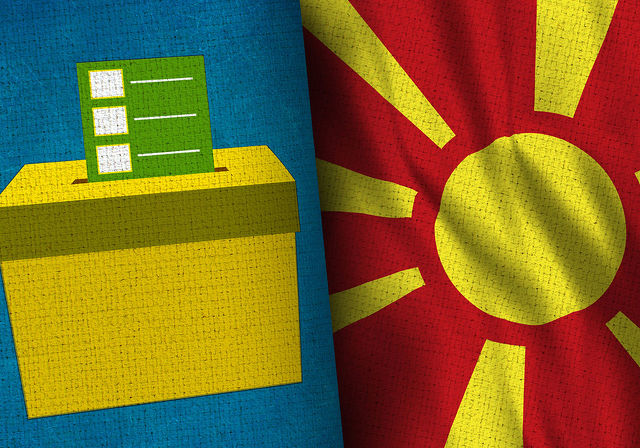
The first round of presidential elections was held in North Macedonia on 21 April and was considered to be exceptional in several aspects: it was the first time that the new official name of the country was used in the elections, and there was a female candidate, also for the first time in the nation’s history. The elections, however, did not reach the 50% electoral threshold—hence, a runoff will take place on 5 May, featuring the two candidates with the highest number of votes: Stevo Pendarovski, a joint presidential candidate of the Social Democratic Union of Macedonia (SDSM) and the Democratic Union for Integration (DUI), and Gordana Siljanovska-Davkova, the candidate of the main opposition party, the Internal Macedonian Revolutionary Organization – Democratic Party for Macedonian National Unity (VMRO–DPMNE).
 Source: Shutterstock
In the first round, around 1.8 million voters could choose between three university professors: Pendarovski gained 42.8%, and Davkova 42.2%, while Blerim Reka, delegate of the Albanian opposition parties, achieved 10.6%. Similarly to the name change referendum held last July, the turnout was low for the presidential elections, only reaching around 41%. However, that time, the unsuccessful referendum was followed by a successful vote in the Macedonian parliament in favour of the agreement, which was later ratified by the Greek Parliament as well, thus ending the almost three-decade-long Skopje–Athens name dispute. So the country, officially called North Macedonia since February this year, could start its NATO accession path.
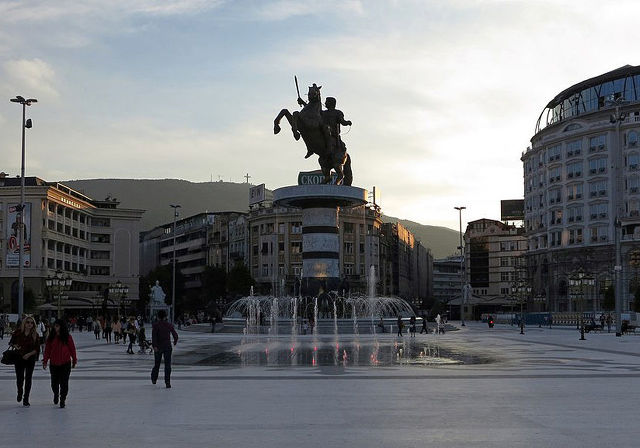
Skopje city centre
Source: Wikimedia Commons, author: d*oraz, licence: CC BY-SA 2.0
The society in North Macedonia is still deeply divided on the name change. This is clearly seen from the tight first round, where SDSM’s and VMRO–DPMNE’s presidential candidates—that is, the candidates of the supporters and the opponents of the country’s new name—run neck and neck. Stevo Pendarovski is a strong advocate of the Prespa Agreement. In his presidential campaign, the 56-year-old professor of the University American College Skopje—and the chief negotiator for North Macedonia’s NATO accession—used the slogan “Forward Together,” emphasising the importance of the country’s NATO and EU accession. Pendarovski is the first consensual presidential candidate of the ruling Social Democratic Union of Macedonia (SDSM) and the Democratic Union for Integration (DUI), the largest Albanian political party in the country. Gordana Siljanovska-Davkova, backed by the main opposition, the Internal Macedonian Revolutionary Organization – Democratic Party for Macedonian National Unity (VMRO–DPMNE), is the first woman presidential candidate in the country’s history. The 63-year-old professor of the Faculty of Law in Skopje claims that the name change was unconstitutional—however, during her presidential campaign, she stated that if elected, she would respect the decision. Her campaign slogan is “Justice for Macedonia—The Fatherland Calls.” President Gjorge Ivanov, who leaves office in mid-May, has already served two terms. Thus, he could not run for President again. During his mandate, Ivanov, himself a member of the VMRO–DPMNE, strongly opposed the name deal.
.jpg)
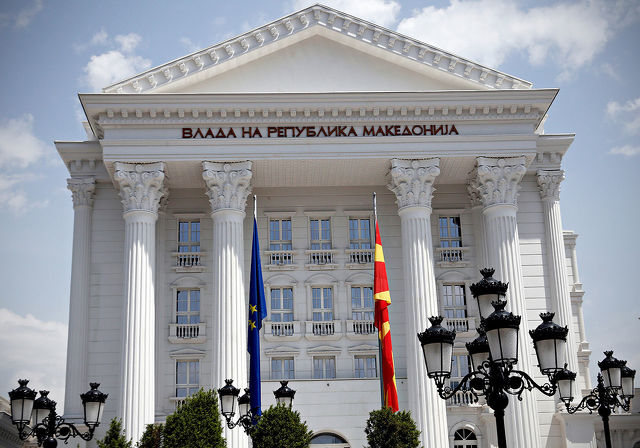
Government building in Skopje, North Macedonia
Source: Shutterstock
This was the sixth presidential election since the country’s peaceful secession from Yugoslavia and the declaration of its independence in 1991—and it had the lowest voter turnout ever. The voting is secret and direct, and the term of office lasts five years. The duties of the head of state are mainly symbolic, but he—or she—is also the commander in chief of the armed forces and responsible for signing the laws passed by the parliament. There has always been a second round in the earlier presidential elections, but never with such a narrow gap between the first-round candidates. If the necessary threshold will not be achieved in the runoff (which was already reduced from 50 to 40% in 2009), the entire election procedure will be repeated.
As already mentioned, in June 2018, the Prespa Agreement was signed by the Macedonian PM Zoran Zaev and his Greek counterpart, Alexis Tsipras, thus solving the 27-year-long name dispute between the two countries. The agreement is considered crucial on the international level as well and was highlighted as a positive example of reconciliation in the Balkans. In the coming period, the name deal should have an impact on the consolidation between the two countries, as well as the Euro-Atlantic integration of North Macedonia. Nonetheless, the question posed on the last year’s name referendum, “Are you in favour of European Union and NATO membership by accepting the agreement between the Republic of Macedonia and the Republic of Greece?” is still dividing the country. As reported by the media in the region, higher voter turnout in the second round is unlikely. According to general analyst consensus, citizens of North Macedonia will choose between dissatisfaction over the name change and the North Atlantic Alliance and the EU accession path, depending on whom they will give their vote on 5 May.