Kategória: Research Blog
Forrás: https://digitalistudastar.ajtk.hu/en/research-blog/multi-speed-energy-in-europe-interview-with-he-pal-sagvari
Multi-speed energy in Europe?
Interview with HE Pál Ságvári
Szerző: Mihály Kálóczy, Cecília Varsányi ,
Megjelenés: 10/2017
Reading time: 10 minutes
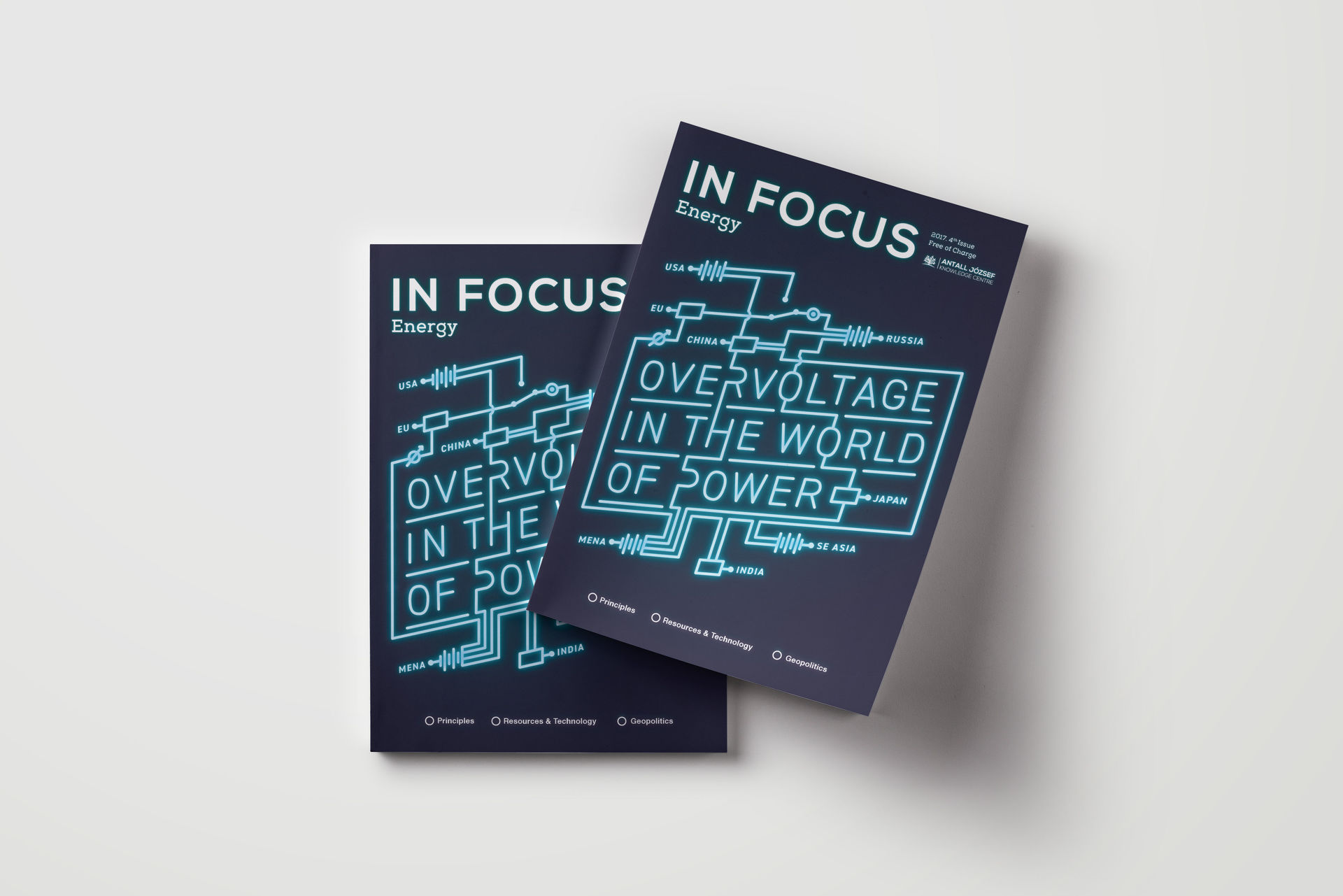
Europe is without a doubt the champion of global climate acts, but the following question is still a difficult one: Can the EU stand against cheap energy from the US and China and against other competitiveness factors?” – HE Pál Ságvári, Ambassador-at-Large for Energy Security at Ministry of Foreign Affairs and Trade of Hungary raised this intriguing matter during an interview for AJKC’s next In Focus issue. In this blog article, we collected the most exciting excerpts from this interview. The issue In Focus: Energy – Overvoltage in the World of Power provides an insight into the general context of the energy market, and, by highlighting specific regions and subfields, seeks to bring the issue of global energy security closer to the reader.
From the perspective of energy markets, how many speeds can you see Europe having?
When we talk about determining energy policies of the European Union or another country, we usually visualize it as a triangle. Within it, we were supposed to enforce three hardly compatible objective frameworks simultaneously: supply security, affordability, and sustainability. Due to their nature, this is hardly possible, forcing one to put their thumb somewhere on the three-armed scale.
More developed Western countries, mainly Germany, Denmark (and now the French president is pulling his country in this direction as well), definitely prefer sustainability, while countries East of the Leitha prefer supply security. A result of this difference in approaches is that western countries don’t even really understand the expression “supply security.” The Russian-Ukrainian gas crises of 2005, 2006, and 2009 unequivocally caused a shock in East-Central-Europe. If gas supplies fall short in the Western countries, prices rise somewhat, while on this side of the continent energy consumers need to be restrained in some cases. Although Europe has improved a lot in this regard over the last ten years, the different perceptions of the approach remain. This characteristic can also be perceived by outsiders as a “multi-speed” energy policy.

HE Pál Ságvári, Ambassador-at-Large for Energy Security
at Ministry of Foreign Affairs and Trade of Hungary
To which source countries could the Southern opening connect the V4 region?
Firstly, Europe’s flagship project is to connect the Central-Asian sources with the European markets. This could be done through Turkey and Greece via the Southern Corridor, which aims at connecting the Shah Deniz gas field in Azerbaijan to Europe after 2020. Since this project is already nearing completion and these sources are mostly not directed at Central-Europe, the most important question is what other Central-Asian sources can be included in addition to the ones in Azerbaijan. In this regard, there are many questions: When can natural gas be exported from Iran after the nuclear agreement, how stabile will Iraq be after the expulsion of ISIS, and, on the other side of the Caspian Sea, how committed will Turkmenistan be towards selling to Europe.
Secondly, the value of the Eastern Mediterranean area has grown due to its proximity. In the last five years, new and important fields were found in Cyprus, Israel, Egypt, and Lebanon, roughly identical in quantity to the reserves in Norway, and new exploration sites are constantly being opened. In an ideal political scenario, the Eastern Mediterranean territory could truly solve Europe’s dependency problem. Despite many potential risks, two realistic options seem to be taking shape concerning the setting-up of fields and the transportation of resources to Europe by the beginning of 2020s. The first one is an Egyptian LNG terminal, now used for import purposes, the enlargement and “bi-directionalization” of which is a viable alternative. The other possibility could be the construction of a bigger pipeline, the EastMed pipeline system (Eastern Mediterranean Natural Gasline), which goes through the Region of Levant, Cyprus, and Crete to the EU.
Thirdly, the United States of America could become a supply country. Donal Trump’s visit in Warsaw brought a change in U.S. doctrine. During the Obama administration, the American objective was to become self-supplying and to decrease their dependency on oil monarchs. But Trump announced his intention to create an American energy dominance. He did this in Warsaw in the context of Central Europe, thus some of the large amount of shale gas intended for the global market could end up in Central Europe.
The short-term competitiveness of LNG in Europe is, of course, limited by the costliness of transatlantic transportation. In the long run, it must be taken into consideration that the cheaply exploitable Russian sources are depleting. In the middle of the 2020s, when difficult-to-access Russian fields will also come into play, larger amounts of LNG will be made available, and its competitiveness and certain bargaining positions will likely change.
[…]
High voltage post
Forrás: Shutterstock
How can low energy prices be reconciled with the climate targets?
That is a very good question. Basically, tendencies have to be examined. The Western European, German, Danish and French aims assume that the specific costs of renewables decrease gradually and consistently. If we trust this assumption, then we should expect prices to be competitive with other energy resources, and thus affordability and sustainability in the previously mentioned triangle can be immediately reconciled. But we don’t know the exact date of the eventual turning point when the balance will change and progressive technologies will become affordable. Obviously, renewable energy has much to improve regarding efficiency, not just in production but along the whole value chain, including, for example, system control and the appearance of connected devices in the residential sector. This will result in further cost reduction. Today, we can still claim with certainty that, even compared to nuclear energy, renewables are more expensive. So what should a future environment-friendly and affordable energy mix look like?
The governments of Central and Eastern European typically plan in a conservative manner, and Hungary also aims for a balanced energy mix: A baseload power plant is necessary in the long run, ensuring 40 % of the total supply, which is in line with Western European trends, but not in the first, but the second wave. Using readily available and cheaper renewables, a low carbon production of 60-70% may be attainable (including the nuclear sources – ed.), with the remaining amount coming from balancing resources.
Europe is without a doubt the champion of global climate acts, but the following question is still a difficult one: Can the EU stand against cheap energy from the US and China and against other competitiveness factors? The trend of energy-intensive industrial sectors has been relocated from Europe, sometimes as far as the United States, is unfortunately continuous. This “champion of renewables” strategy will be affordable if the price of these technologies can be lowered, making them competitive with American and other fossil energy resources. The great European forces are moving things in this direction. The only question is when and how the Central European countries should get on this bandwagon. We are constantly looking for answers.
[…]
From an energy perspective, what is the most pressing issue our region is facing?
Infrastructural development in the region is really slow but it’s on track. I think that by 2020 the CEE region will be in a much better position regarding energy vulnerability, as it will be able to receive more gas sources from different locations. Existing and new infrastructures will be able to operate efficiently and comply with market rules.
The next challenge is the question of the competitiveness of cross-border tariffs. Transit tariffs from one country to another are quite high and make cross-border trade uncompetitive, especially for LNGs. While average crossing tariffs in the region generally cost 1-1.5 EUR / MWh, the tariff of transmissing gas from Croatia to Hungary, for example, costs 6 EUR / MWh. Taking into consideration that the price of gas is around EUR 15 / MWh, we can see that shipping from Croatia to Hungary is almost half of the price of the commodity itself: the crossborder tariff is higher than the entire transatlantic shipping cost.
There is plenty of room for cuts, but as long as each country is thinking within its own box and not on a regional level, there is no chance for progress. On an EU and regional level, this is the next problem that needs to be solved quickly. This is also very important because of the approaching expiration date of Hungary’s long-term gas contract in 2020, as well as due to the utilisation of alternative options.
Opening pic: AJKC