South Korea hosts the 2018 Olympic Winter Games in PyeongChang, Gangwon Province, for 17 days from 9 to 25 February 2018. It will be followed by the 10-day Paralympics, starting off March 9. South Korea already hosted the Summer Olympics in 1988: an event that was very significant in bringing the international attention to the country and showcasing its economic miracle as well as its efforts for democratization after the authoritarian regime of Park Chung-hee. However, this coming Winter Games could become even more significant in the history of the two Koreas, since the Northern neighbour is also joining the Olympics.
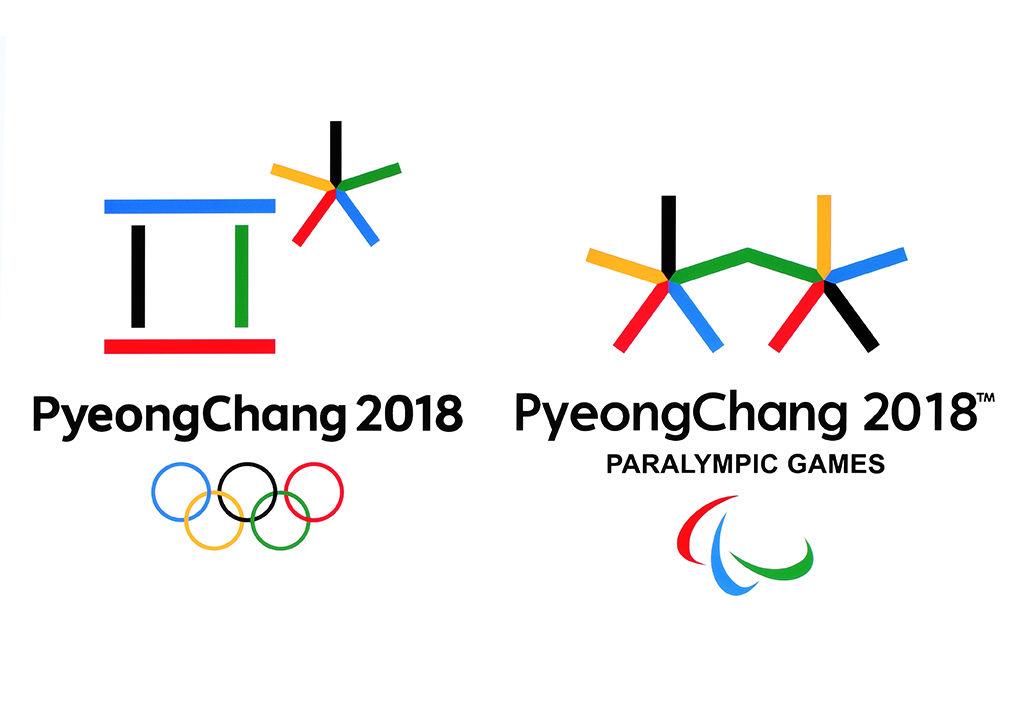
Official logos of the 2018 Winter Olympic Games in PyeongChang, South Korea
Source: Shutterstock
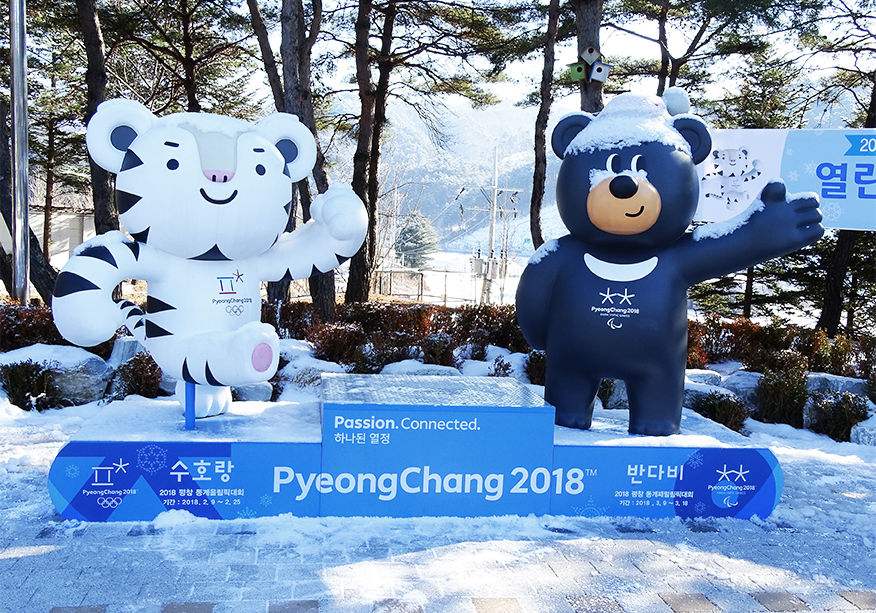
For the first time in 30 years after the 1988 Seoul Olympic Games, a major international sports event, the Olympic Winter Games will be held in the Republic of Korea, in three competition venues: in PyeongChang (opening and closing ceremonies and most snow sports), Jeongseon (alpine speed events) and in the coastal city of Gangneung (all ice sports). Athletes will compete in 102 events in 15 sport disciplines for more than 100 gold medals. A total of 93 teams have qualified to compete from 92 nations. The official emblem of The Games symbolises a “world open to everyone” and “where heaven meets earth”, combining the hangul (the Korean alphabet) initials of PyeongChang. The logo also represents ice and snow, and the athletes and people from all over the world, coming together in PyeongChang. Sooharang and Bandabi are the official mascots of The Games. The white tiger is related to Korean mythology and the Asiatic black bear is a popular animal native to the Korean peninsula.
Official mascots of the 2018 Winter Olympic Games in PyeongChang, Sooharang and Bandabi
Source: Shutterstock
South Korea, an economic heavyweight and world leader in information and communication technology, is going all out to promote its technology and innovation, and showcase the country’s global competitiveness. Since the host cities of The Games are on the Eastern side of the country, Koreans connected the venues with the airport and the capital city of Seoul with a new KTX (Korea Train eXpress, high-speed rail system) line. This line of KTX is equipped with LTE-R technology that allows for high-speed wireless voice and data communication, so passengers are entirely connected throughout the whole trip. To make it even more convenient and easy for visitors, an Augmented Reality based navigation service was also introduced. To ensure that these are the most technologically advanced Olympics ever, the world’s first 5G data transmission standards will pilot at the Winter Games. Furthermore, the ultra-high definition and ultra-wide viewing paired with immersive virtual reality and 360-degree views will provide an even more realistic experience. The official interpretation and translation application, “GenieTalk”, is based on artificial intelligence technology, supporting some 29 languages. Robots equipped with an app that has the details of game schedules and tips for tourists at event venues, will provide assistance to visitors from around the globe.
However, what is more important, and what might gain even more international attention, is the fact that North Korea is also participating in the PyeongChang Olympics. After months of escalating tension and the threat of a nuclear war, North Korean leader Kim Jong-un’s New Year address brought a sudden and dramatic change. The North Korean leader announced that he was considering sending a team to the Olympics, and since then the communication and military hotlines between the two Koreas are working again after a two-year break. Also, in a couple of high-level talks, the two Koreas agreed that the North will send a delegation of more than 400 people: 230 cheerleaders, 140 artists and 30 Taekwondo players for a demonstration, and a small group of athletes. They also agreed that the two Koreas march together under the neutral Korean Peninsula flag, and field a combined women’s ice hockey team. Upon the demand from the North, South Korea and the United States agreed to conduct delayed joint military exercises.
The neutral Korean Peninsula flag
Source: Shutterstock
Although many welcomed the sudden change in the dialogue, the participation of the North and its possible meanings met criticism both from the South Korean side and from the international community. Many warned that the North’s participation in the PyeongChang Olympics should not run counter to sanctions that the international community is putting together. Furthermore, the international community agreed that while the inter-Korean talks resumed due to the North’s wish to join The Games, they should eventually lead further to a discussion on peninsular tensions and even nuclear capabilities. Moreover, the South Korean government should handle the North’s delegation very carefully. A lot of factors around the North’s participation can go against the sanctions and international law, as well as not benefitting the South Koreans and their athletes. Despite all those dilemmas, South Korea is doing its utmost to organize a Winter Games its spectators would never forget, and to prove that Koreans are indeed world leaders in ICT and innovation. With all of this in mind, we have to wait and see what the 2018 Winter Olympic Games might bring to the two Koreas and the world.
The opening pic is by rvlsoft/Shutterstock