Since Prince Harry and Meghan Markle announced their engagement, there has been a lot of talk about past divorces and divorcees in the Royal Family. Indeed, the last time an American divorcee married one of the royals, it caused a constitutional crisis and reshaped British history, indirectly putting the Queen on the throne. What has changed since then?
The Royal Family is unlike any other. They promote an ideal behaviour, a model life in every way. This naturally includes a successful marriage; you only need to look at the 70-year-old union between the Queen and Prince Philip. Unfortunately, this also meant that divorce had been considered to be unheard of for quite a while.
It is especially a tricky business because of the Church of England. The monarch is the ruler of the church and is referred to as the “Defender of the Faith.” Naturally, Her Majesty takes this role seriously and has always tried to live accordingly. And the Church of England disavows divorce and until recently prohibited the remarriage of a divorced person if their former spouse was still alive.
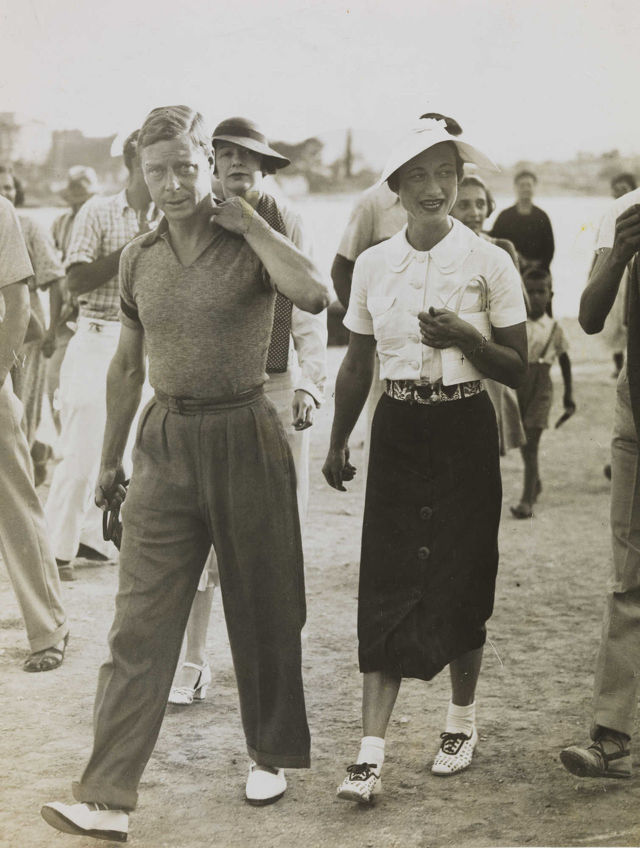
Mrs Wallis Simpson
Attitudes were vastly different in Britain before World War II, when Edward VIII intended to marry the twice-divorced Mrs Simpson. Their relationship is believed to have started in 1934, but Edward – then a prince – denied it. She was presented at court a year later, much to the outrage of the Royal Family. When Edward came to the throne in 1936, it soon became apparent that he wanted to marry Mrs Simpson. However, the Church of England could not allow him to wed a divorcee with two living ex-husbands, and the public was reluctant to accept an American woman as Queen.
King Edward VIII and Mrs Simpson on holiday in Yugoslavia, 1936
Source: Wikimedia
So the King chose to abdicate, saying in a BBC broadcast that he could not do the job of a king “without the help and support of the woman [he] love[s].” Edward’s younger brother, Prince Albert – the current Queen’s father – then became George VI.
Of course, their situation was quite different from that of Prince Harry’s. For one, he is not the King, there is no worry about having an American Queen this time.
Group Capt. Peter Townsend and Antony Armstrong-Jones
Not long after Queen Elisabeth’s coronation, another marriage scandal broke out: Prince Margaret was in love with the divorced Group Capt. Peter Townsend. In the 1950s, the abdication was not so long ago, so everyone remembered the chaos of the 1930s with Mrs Simpson.
As the Princess was under the age of 25, the Queen had to consent to her sister’s marriage, but her role as the Head of the Church of England made this almost impossible. It did not help either that Winston Churchill, the Prime Minister at the time, said it was unlikely his cabinet would approve of their marriage, despite the overwhelming public support for the couple. Princess Margaret was given a choice – she could marry Townsend if she renounced her royal rights. In the end, she chose her royal status and said that she would not marry Peter Townsend.
A few years later, she married Mr Antony Armstrong-Jones, a photographer, who received the title of Lord Snowdon upon his marriage. The Church of England’s first modern shock came in 1978, when the couple decided to end their marriage. They had been separated for years, but the public scandals with lovers made the divorce inevitable.
In the 1970s, the divorce rates surged, probably due to the liberal developments of the era. Divorce was beginning to become culturally accepted, and Princess Margaret was the first one to nudge her family towards the modern trends.
Divorces of the Royals
By the 1990s, the Royal Family could no longer escape divorces. By 1992, three of the Queen’s children ended their marriages. By that time, it was obvious that it was much better this way than to continue with the dramatic headlines. Princess Anne divorced from her first husband Mark Phillips, Prince Andrew ended his union with Sarah Ferguson, and the long-coming separation of Prince Charles and Princess Diana was officially acknowledged.
Divorce finally became tolerable in the Royal Family. However, the remarriage of divorcees was still not acceptable until 2002. When Princess Anne remarried in the ‘90s, she had her wedding in Scotland because she could not have a service by the Church of England.
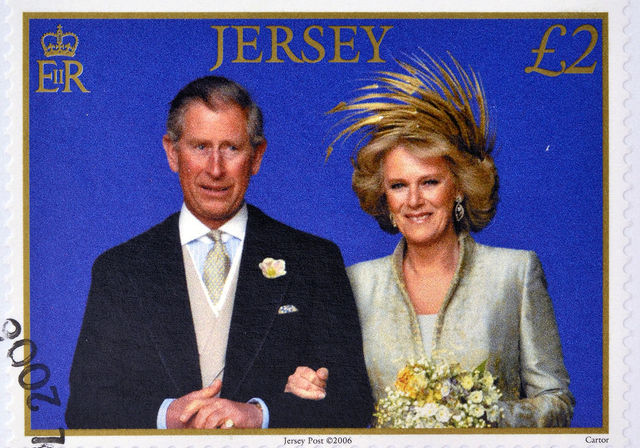
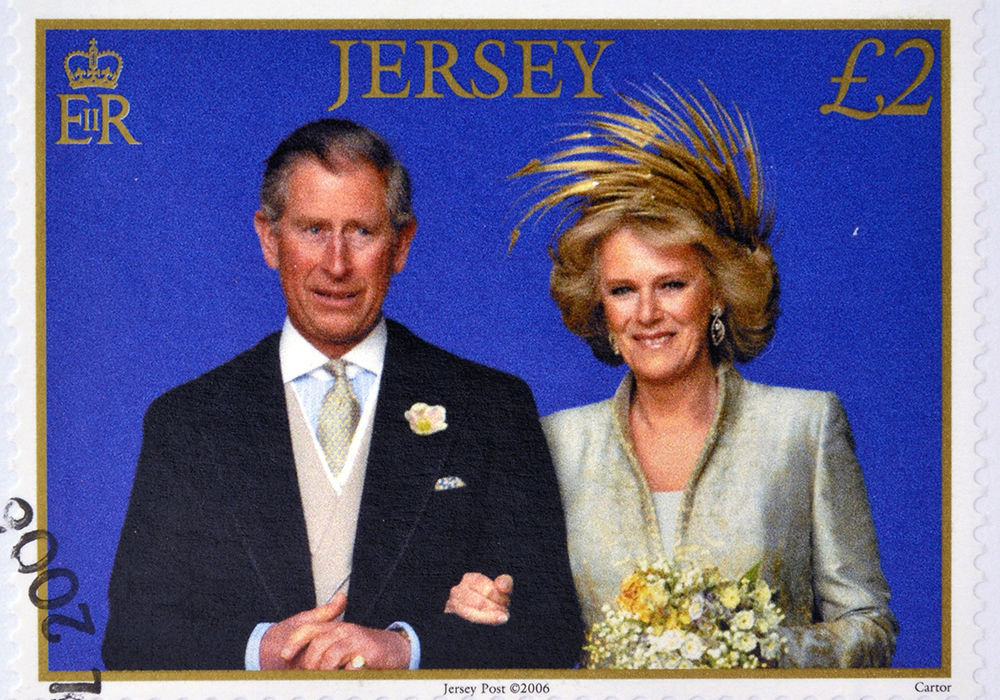
A stamp commemorating the wedding of Prince Charles and Camilla Parker Bowles
Source: Shutterstock
In 2002, the Church of England dropped their provision against remarriage, and individual clergymen were empowered to decide on a case-by-case basis whether to conduct such weddings or not. This breakthrough finally made it possible for Prince Charles and Camilla Parker-Bowles to wed in 2005, after both divorced their earlies spouses. It was still hard to find a clergyman to perform a ceremony, so they opted for a civil service which was followed by a blessing at St. George’s Chapel. Their wedding was the first in the Royal Family between two divorced people and became the monarchy’s boldest acknowledgement against the stigma of marital breakdown. It was especially important as Charles is the heir to the throne, so he will one day lead the Church.
Meghan Markle
Apjához hasonlóan Harry herceg is hasznot húz az egyház modernizációjából. A canterburyi érsek (aki a királynő után a második legmagasabb posztot foglalja el az Anglikán Egyházban) ugyanis nem ellenezte a nászt, sőt, inkább örömét fejezte ki annak bejelentése után. Természetesen továbbra is be kell tartani bizonyos előírásokat: Meghannak az egyház előírásai szerint meg kell keresztelkednie, és a párnak az esküvői szertartást is egy történelmileg fontos templomban kell tartania.
Ugyan a királyi család feladata a tradíciók életben tartása, a válás megbélyegzése szép lassan eltűnik a hagyományok közül. Bár Harry herceg menyasszonya kétségtelenül kapott kritikus megjegyzéseket, ezek elsősorban társadalmi helyzetére és bőrszínére irányultak, nem pedig arra, hogy korábban elvált. Úgy tűnik tehát, előző házassága semmilyen problémát nem okoz az új frigy megkötésekor. Csak remélni lehet, hogy a királyi család jelenlegi és jövőbeli generációi teljes szabadságot élvezhetnek majd a házasság – és nem kevésbé a válás – terén.