Kategória: Research Blog
Forrás: https://digitalistudastar.ajtk.hu/en/research-blog/china-s-emerging-middle-class
China's Emerging Middle Class
A Blessing or a Curse?
Szerző: Orsolya Talárovich,
Megjelenés: 06/2019
Reading time: 8 minutes
As a result of the reforms gradually introduced since the 1990s, the gross domestic product and the global economic influence of the People’s Republic of China have been steadily increasing, and, at the same time, this economic development has lifted hundreds of millions of Chinese out of poverty and resulted in a strong middle class. That is why one of the most analysed socio-economic issues in China nowadays is the impact of the emerging urban middle class on the country’s economic processes, its biosphere, and the political challenge it poses for state leaders.
Source: Shutterstock
The People’s Republic of China has undergone a number of major transformations over the last four decades as a result of its “reform and opening-up” policy. The gradual introduction of economic reforms and the market opening has led to the large-scale development of the country. Thus, China’s gross domestic product and its global economic influence have been steadily increasing since the 1990s. However, after the turn of the millennium, it was certain that the country’s export-oriented economic policy would face more and more difficulties, so, in terms of economic growth, the focus moved to investments and to creating a consumption-driven economy in the country. The 18ᵗʰ Central Committee of the Communist Party of China decided on the consumption-driven economic growth—or, in other words, the expansion of the internal market—in 2012. Initially, this economic policy was to be achieved by expanding public consumption through social welfare systems. Although the Chinese leadership is confident that hundreds of millions of people from the new middle class will help to boost private consumption in the country, it is still growing slowly. The term “new middle class” refers to the segment of the middle layer of society whose members have experienced dramatic positive changes in their living standards in recent decades as a result of vertical social mobility. However, it is important to emphasise that changes in the lifestyle of the aforementioned social class have caused many problems for the country. That is why nowadays one of the most analysed socio-economic issues in China is the impact of the emerging urban middle class on the country’s economic processes, its biosphere, and the political challenges it poses to the state.
There are many varying data about the size of the middle class different countries have. Differences are not surprising at all, as there is no universally accepted definition of who belongs to that social layer; furthermore, classification is generally country-specific and depends on many factors. The most popular way to determine a county’s middle class is to group its members according to their annual income. Using this methodology, current estimates put the size of the Chinese middle class at 400 million people. The definition of the Chinese government says people with incomes ranging from CNY 60,000 to 500,000 per year (USD 7,250 to 62,500) are part of the middle class. McKinsey company, however, uses the range between CNY 75,000 to 280,000 (USD 11,500 to 43,000) per year. But there are several other classifications beyond the foregoing, too. Since different categorisations are based on different income ranges, and there is a significant difference between the various minimum and maximum values, usually, lower-, middle-, and upper-income categories are also distinguished within the middle class. In China, 75% of the middle class fall into the lower income category. Until the very end of the 20ᵗʰ century, Chinese officials preferred to refer to the middle class as the middle-income class or the middle stratum.

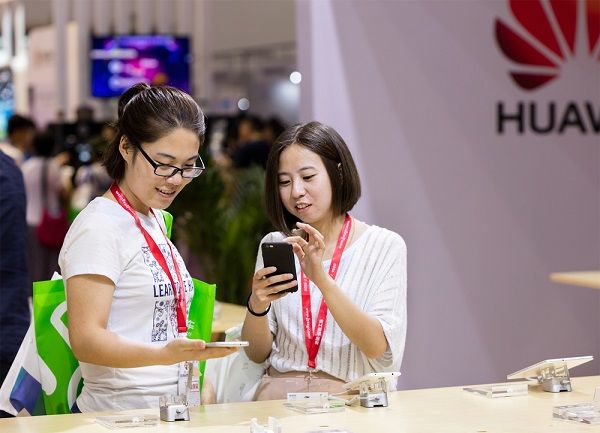
Chinese youngsters in their 20s like to show off their social status through their consumption.
Source: Shutterstock
It is obvious that the hundreds of millions of people from the new middle class have produced the most significant positive changes in the economy. For example, private consumption expenditure increased by USD 559,996 million between 2017 and 2018. Undoubtedly, the new generation, or the so-called second generation (G2), propels economic growth most through its consumption. These G2 consumers are typically teenagers and young people in their early 20s, born after the 1990s and grew up in a “calm” environment and a period of relative abundance. Most of them is an only child because, when they were born, the government started to enforce its birth-planning program quite strictly. They are modern-minded, like to show off their social status through their consumption, and, compared to their parents, are less focused on building economic security. Their “carpe diem lifestyle” also affects the growth of borrowing. Meanwhile, with a dramatic increase in smartphone sales, their demand for information and communication technologies and services has been increasing rapidly since 2006. According to data from 2017, the number of users in China rose to 751 million, exceeding the entire population of Europe.
However, as mentioned, not all members of the middle class take this approach. Due to the rising cost of living and a decrease in GDP growth in the last few years, older citizens pay more attention to increasing their savings. When the Chinese government speaks about the middle class, it considers the entire middle layer without distinction. Political leaders generally believe that people from the middle class, who have a higher standard of living, will be the engine of the economy, as rising wages result in a parallel rising consumption. As the foregoing suggests, this is partly true since the number of luxury goods and vehicles sold in the country in recent years has gone up, and people are also spending more on travel and health care services. However, this is mainly due to the forenamed new generation. So it is clear that classifications based on income alone do not give a realistic picture of Chinese people’s willingness to consume, as they do not take into account age, savings, monthly bills, loans, debts, and the surplus from black and grey incomes.
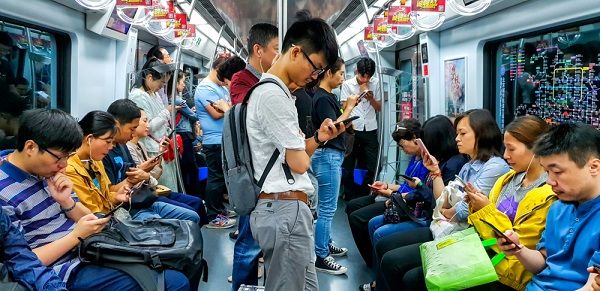
In China, mobile phones are almost indispensable for everyday life, as, beside communication, people use them to pay for different goods and services.
Source: Shutterstock
Evidently, the new middle class really contributes to economic development, even if not on the scale the Chinese government wants. However, social mobility also causes a number of challenges the country will have to face soon. Over the last few years, Chinese people’s dietary preferences have also changed, as they want to buy more and more meat. For example, JD.com has recently launched its new high-tech supermarket called 7Fresh, which is the Chinese version of the American Whole Foods Market. This modern chain store fully meets the needs of a wealthier social class, as they can find everything on its shelves from fresh seafood to high-quality wines. How is this store different from older ones? In this modern mart, customers can pay with face recognition technology, while smart shopping carts help them giving directions all along their purchase. Besides, once the shopping is concluded, the company provides a delivery service which is available to anyone. It takes the purchased goods to the address within thirty minutes provided it is within a five-kilometre radius of the store. In any case, the rise in animal protein consumption among the middle class has caused an increase in the intensity of agricultural production and placed a considerable strain on the environment.
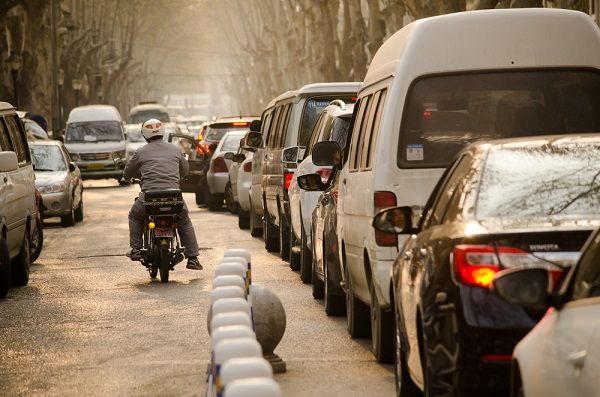
The middle class purchases more and more vehicles, and carbon dioxide emissions from fuel combustion greatly deteriorate air quality in big cities.
Source: Shutterstock
In addition to environmental pollution, another critical issue for the party state is more of a political nature: it is uncertain what impact the widening social class will have on domestic policy. According to modern Western sociology, the middle class often plays a key role in democratising a country. The main reason for this is that its members have less political influence than the upper class, so they try to fight for equal rights. Opinions on long-term effects vary, but almost everyone agrees that, in the near future, the middle class will not pose a real threat to the state party, as citizens—by learning from historical examples—are aware that their higher standard of living is largely due to the internal political stability and, consequently, to the strong party.
Overall, the rise of the middle class can be considered a positive phenomenon in China for the time being, but the country has to pay more attention to addressing the challenges of the changed lifestyle of its members, especially to mitigating environmental problems. One of the corollaries of the higher standard of living is that the new and wealthy layer has a growing need for a clean and healthy environment, and thus, although environmental problems are the result of its increased consumption, its members will be the ones who heighten expectations toward Chinese leaders in this regard too.