Kategória: Research Blog
Forrás: https://digitalistudastar.ajtk.hu/en/research-blog/a-quarter-century-of-bsec-thoughts-on-the-25-years-of-black-sea-economic-cooperation

A Quarter Century of BSEC

Thoughts on the 25 Years of Black Sea Economic Cooperation


Szerző: Tamás Kozma,
Megjelenés: 06/2017
 Reading time: 10 minutes

On 22 May 2017, Istanbul hosted the summit of the Black Sea Economic Cooperation (BSEC). This year, the organization celebrates its 25th anniversary, which is certainly a fitting occasion to look back, evaluate its activities and identify conclusions with regard to its performance. Although the organization never became an excessively influential actor in the dynamics of the region, it has still become the broadest integration of the Black Sea region, aiming to foster peace and stability through the promotion of economic and trade cooperation in this geopolitically important and complex region.

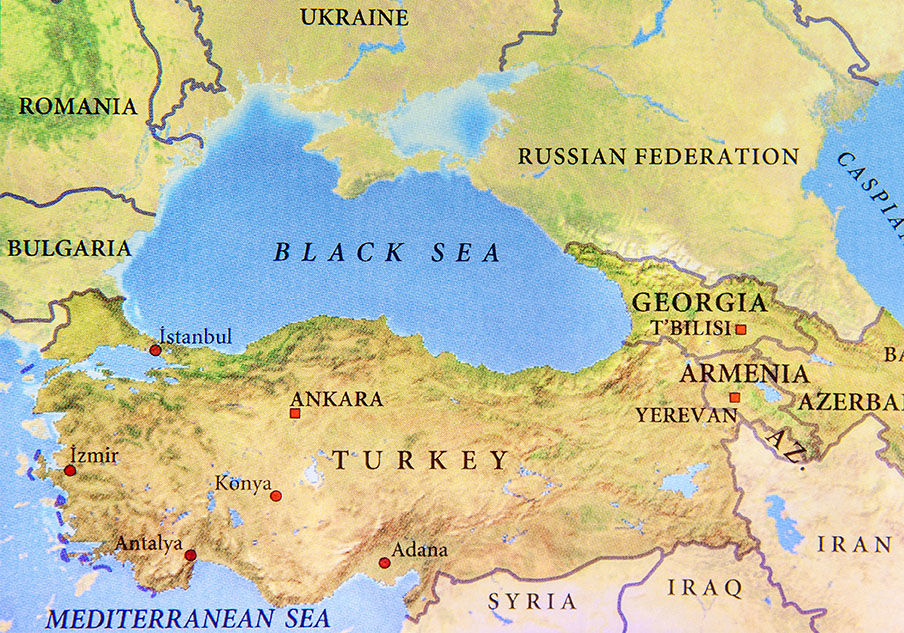
The BSEC, established in 1992, now has 12 member states: Albania, Armenia, Azerbaijan, Bulgaria, Georgia, Greece, Moldova, Russia, Romania, Serbia, Turkey, and Ukraine. It is imperative to see that the time and space when and where BSEC came into being was by far not free of conflicts. The events of early 90s, such as the Transnistrian conflict, the question of Nagorno-Karabakh, or the Abkhazian war were developments that provided the raison d’ être of an organization to the benefit of all member states in times of challenges and opportunities, when the foreign policies of states were going through significant transformation. To this end, the organisation’s focus became establishing and boosting economic and trade relations among its members. 

Map of the Black Sea Basin
Source: Shutterstock

Throughout the past 25 years, there has existed a clearly identifiable set of initiatives and projects within BSEC. Energy and transportation became a major field of their joint efforts. The strategic nature of the Black Sea Basin is based on several factors: It provides warm water ports to its littoral states, an exit route to the Mediterranean Sea, and maritime energy export routes. Moreover, it is a meeting point between regions and a bridge between Asia and Europe. Following the big wave of pipeline construction in the first decade of the 2000s—including the Blue Stream natural gas pipeline, the Baku-Tbilisi-Ceyhan crude oil pipeline, the Baku-Tbilisi-Erzurum natural gas pipeline—the further development of energy infrastructure in the region is still at the top of the agenda. The pipelines currently in construction, called TANAP and TAP, will enable the transportation of Caspian Sea-origin natural gas to Greece and further on to Italy via Albania.

At the same time, the progress of the joint Russian-Turkish pipeline, Turkish Stream, proves that the relevance of the Black Sea region is on the rise in regional energy transit and energy security dynamics. A similar relevance is attributed to the region in terms of connectivity and transportation. One of the key projects is the Black Sea Ring Road, the progress of which may be different in each country involved, but it is still a regional project of key importance, just like the Baku-Tbilisi-Kars railroad project, which is expected to become operational in the near future. Since the Black Sea region can be considered as a bridge region between Asia and Europe, it is also questionable to what extent this region will be able to benefit in terms of trade from the China backed One Belt One Road strategy. China’s grandiose strategy might advance the BSEC countries with regard to developing transportation channels and trade volumes via these routes.

It is necessary to highlight that, over the years, BSEC has received a lot of criticism as well. Some authors refer to it as an organization that resulted in relative failure. After Rosecrance, one might assume that trading states do not enter into war, and therefore cooperation in the fields of economy and trade among states fosters peace and prosperity in their neighbourhood. However, this was not the case in the Black Sea region after the founding of BSEC. It is a fact that it was not possible to turn the region into a conflict free zone, which is exemplified by the Russo-Georgian war in 2008, the events in Eastern-Ukraine since 2014, or the flashes of the long-frozen Nagorno-Karabakh in spring 2016.

One can look at the dividedness of BSEC member states along several issues, for instance by assessing their interests in the Black Sea region’s energy geopolitics. Competing pipeline projects such as Nabucco and South Stream are good symbols of the rivalry for geopolitical gains that further fragments the interest of states within BSEC. Beyond that, BSEC carries the typical characteristics of international organizations. The varying size, resources, and power of any given member state determines its capability to promote their own interests. Accordingly, this asymmetry in power relations remains a primary issue.
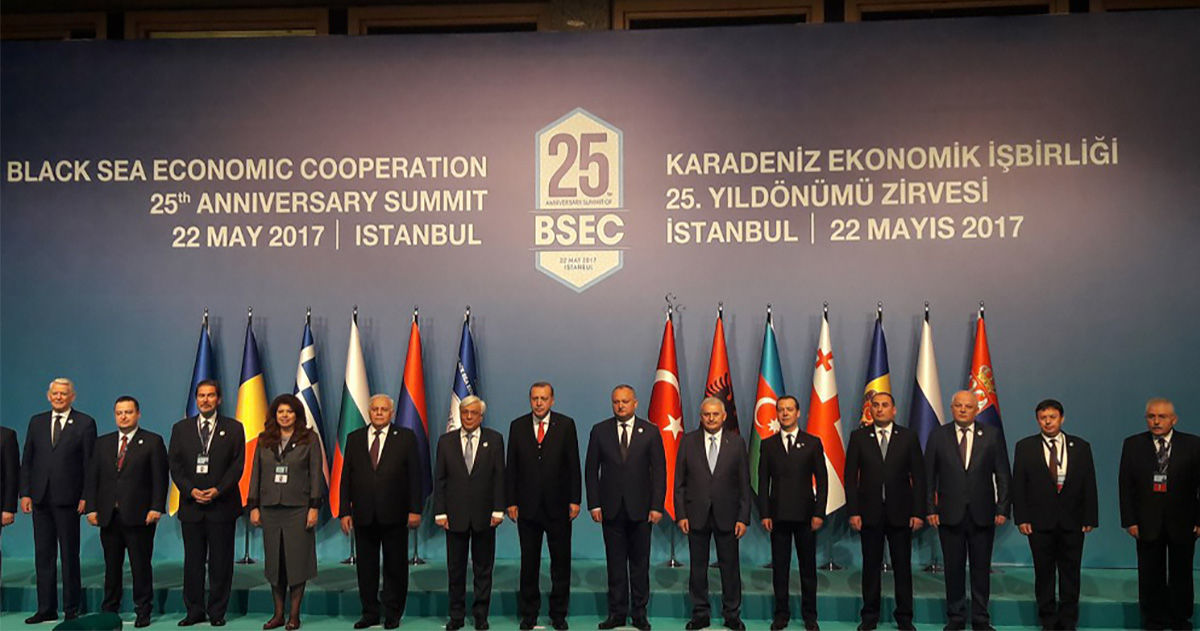
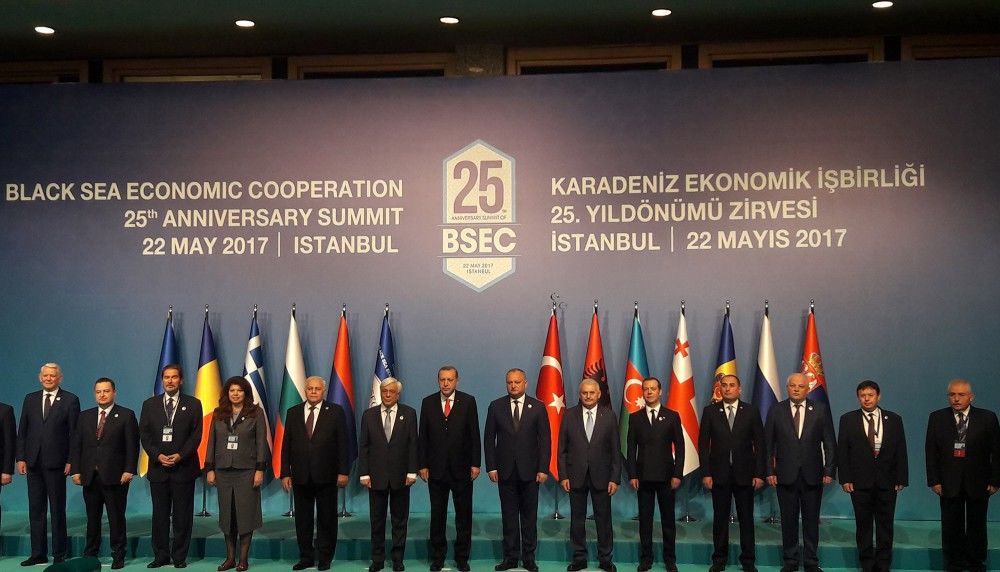
The BSEC Summit in Istanbul on 22 May 2017
Forrás: Azertac

The picture that emerges from the interviews on the occasion of the 25th BSEC Summit is that BSEC covers a region of increasing importance and offers a wide range of opportunities for cooperation, although more dynamism is needed to be able to benefit from them. Ahead of the summit, the organizations’ Secretary General, Michael Christides, said that “the declaration will convey a strong and loud message that the BSEC is here, it is adapting to changing circumstances, and it is reacting positively and in a timely way to new challenges.” Regarding the future of BSEC, a key question is to what extent its member states will succeed to imbue it with more dynamism and a project-based approach.

Turkish President Recep Tayyip Erdoğan highlighted in an interview on BSEC that "the more we lean toward the projects that address the daily lives of the people on our streets, the more we are on the right track” in addressing the needs of the organization. It is a fact that there are unutilized capacities in the intra-Black Sea region trade, and thus there is a long way to go in this regard. One thing is certain, however: Transportation and energy projects will continue to be important for the Black Sea region. This might bring projects that are of strategic interests of countries both within and beyond the region into fruition. At the same time, it is difficult to judge to what extent BSEC will be able to act as a framework behind these projects, or if BSEC will be able to act as a competitor to bilateral or other multilateral fora among its member states at all. The latter thread might remind one of the question whether BSEC will become a more pronounced organization or if it is more likely to remain a rather silent, regional alliance.